The Pig-Nosed Turtle: A Unique Reptile Named for Its Snout, Easy to Keep but Prone to Illness


Marine Biology
The Pig-Nosed Turtle: A Unique Reptile Named for Its Snout, Easy to Keep but Prone to Illness

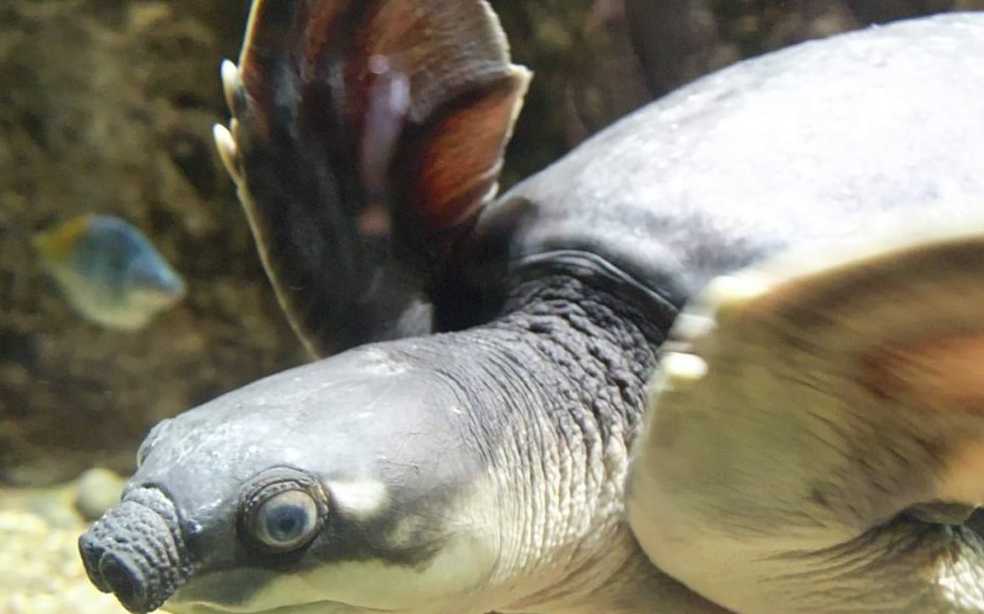
Native to freshwater rivers and lakes in northern Australia and New Guinea, the pig-nosed turtle (Carettochelys insculpta), aptly named for its pig-like snout, stands out among aquatic turtles for its distinctive appearance and paradoxical care requirements. While often praised as a manageable pet for reptile enthusiasts, this species also has a reputation for susceptibility to health issues, making it a fascinating yet challenging creature to maintain.


A Snout Like a Pig: Physical Traits and Adaptations

The pig-nosed turtle’s most defining feature is its fleshy, downturned snout, which resembles a pig’s nose and functions as a snorkel, allowing it to breathe while mostly submerged. Its shell, or carapace, is smooth and leathery (unlike the hard scales of most turtles), ranging from olive to dark brown, and can grow up to 70 centimeters in length. Flipper-like hind legs, adapted for swimming, give it a hydrodynamic profile in water, while its front legs feature claws for digging nests or navigating riverbeds. This unique blend of traits makes it the only surviving member of its family, Carettochelyidae, a relic of ancient turtle evolution.

Captive Care: Easy to House, Hard to Keep Healthy

In captivity, pig-nosed turtles are relatively straightforward to house: they require a large, filtered aquarium with clean, warm water (24–28°C) and ample swimming space. They are omnivorous, feeding on aquatic plants, insects, crustaceans, and commercial turtle pellets, which makes diet planning simple. However, their susceptibility to illnesses—particularly shell infections, respiratory diseases, and vitamin deficiencies—stems from sensitive physiological needs. Poor water quality, inadequate nutrition, or stress from overcrowding can quickly lead to health crises. Unlike many turtles, they are also prone to skin lesions if kept on rough substrates, requiring careful habitat design.

Conservation Status and Wild Challenges

In the wild, pig-nosed turtles face threats from habitat destruction, pollution, and illegal collection for the pet trade. Listed as Vulnerable by the IUCN, their populations have declined due to dam construction, which disrupts nesting sites, and predation by invasive species. In Australia, conservation programs monitor wild nests and promote captive breeding to reduce pressure on wild populations. For hobbyists, responsible ownership means prioritizing veterinary care, maintaining pristine water conditions, and avoiding purchasing wild-caught individuals.


The pig-nosed turtle’s dual nature—easy to care for in theory, yet fragile in practice—highlights the complexity of keeping exotic species. Its pig-like snout and ancient lineage make it a living curiosity, but its health vulnerabilities serve as a reminder that even "manageable" pets require specialized knowledge and dedication. As both a symbol of evolutionary uniqueness and a poster species for responsible reptile care, the pig-nosed turtle underscores the delicate balance between human fascination and the biological needs of Earth’s most unusual creatures.
Latest Stories
Feline News2 minute readThe Korat cat, originating from Thailand’s Nakhon Ratchasima province (formerly Korat), is a breed deeply rooted in history and cultural significance. Revered for centuries as a symbol of good luck and prosperity, these silver-blue felines have enchanted the world with their striking appearance and affectionate nature.
Feline News2 minute readThe Burmese cat, a breed steeped in history and adored for its regal charm, continues to captivate cat lovers worldwide. Originating from Myanmar (formerly Burma), these medium-sized shorthairs are celebrated for their luxurious coat, affectionate demeanor, and intelligence. Here’s an in-depth look at this ancient breed, combining the latest research and international standards
Feline News2 minute readThe Russian Blue, with its silvery-blue coat and piercing emerald eyes, stands as a paragon of feline elegance, earning the title "Noble of the Shorthairs" 5. Originating from Arkhangelsk Port in Russia—once known as the "Blue Angel Harbor"—this ancient breed derived its name not from color but from its birthplace 3. In 1860, sailors introduced them to Europe, and they debuted at London's Crystal Palace Exposition in 1875 as "Archangel Cats," captivating audiences with their otherworldly allure
Astro Information1 minute readEnceladus, Saturn’s icy moon, harbors a subsurface ocean beneath tiger-stripe fractures that erupt icy particles into space. These geysers form a dense ice cloud over the south pole, feeding Saturn’s faint E ring. The Cassini spacecraft (2004–2017) provided definitive evidence, capturing this true-color, high-resolution image during a close flyby, revealing shadowed ice chasms and active vents.
Animal Information1 minute readNative to Africa, warthogs (Phacochoerus) earn their name from the fleshy facial warts beneath their eyes. Split into the common warthog and desert warthog, these ungulates have heads comprising one-third of their body length, with tusks reaching 64 cm. They subsist on grass roots and tubers, surviving months without water—adaptations that define their harsh savanna lifestyle.
Astro Information2 minute readA close-up from NASA’s Mars Reconnaissance Orbiter (MRO) HiRISE camera unveils the weathered craters and aeolian features of southern Acidalia Planitia. While standard HiRISE imagery often appears in striking blue tones—a result of multispectral processing to enhance geological details—the region would likely appear gray or pale red to human eyes. Of course, no human has yet witnessed this Martian landscape firsthand—unless we count Andy Weir’s fictional NASA astronaut in The Martian.
Feline News1 minute readDubbed the "parlor panther," the Bombay Cat captivates with its jet-black coat and mesmerizing copper-gold eyes, an uncanny resemblance to the wild black leopard. Originating in 1958, Kentucky breeder Nikki Horner meticulously crossed sable Burmese cats with black American Shorthairs, aiming to create a domestic feline embodying both exotic allure and gentle temperament. After years of selective breeding, her vision became reality, establishing the Bombay as a breed that bridges wild aesthetics with affectionate companionship.