


Planetary


1 minute read

Savudrija Lighthouse and Celestial Star Trails: A Timeless Navigation Portrait

The historic Savudrija Lighthouse shines along the northern coast of Istria Peninsula in this masterful night-sky composition. Built in the early 19th century, the beacon has guided Adriatic sailors for centuries, its beam contrasting with the ancient navigational icon above: Polaris, the North Star. In the image, Alpha Ursae Minoris traces the shortest arc around the North Celestial Pole—the cosmic pivot of Earth’s axis—at the center of concentric star trails.

Savudrija Lighthouse and Celestial Star Trails: A Timeless Navigation Portrait
1 minute read

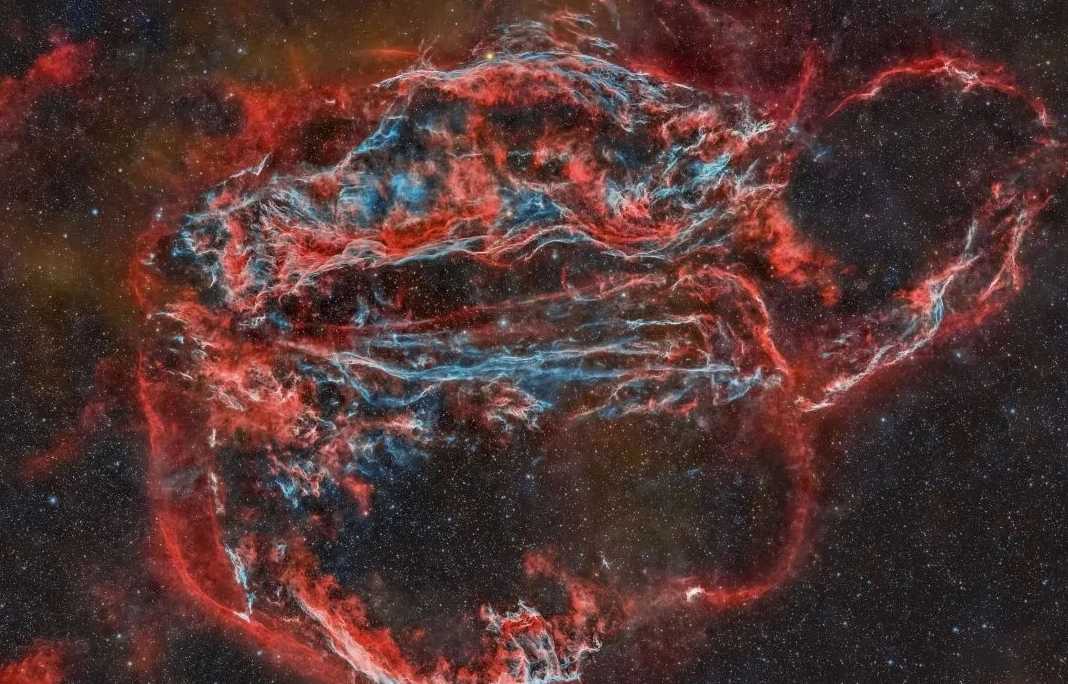
The Veil Nebula: Cosmic Relic of a Supernova That Lit the Ancient Sky

These ethereal wisps are the last observable remains of a star that perished in a supernova explosion ~7,000 years ago, giving birth to the Veil Nebula. When the star detonated, its expanding gas cloud shone as brightly as a crescent Moon, lingering in Earth’s sky for weeks during humanity’s prehistoric era. Today, this supernova remnant—known as the Cygnus Loop—has faded, visible only through small telescopes pointed at the constellation Cygnus.
The Veil Nebula: Cosmic Relic of a Supernova That Lit the Ancient Sky
1 minute read

Arp 273: A Cosmic Love Story of Colliding Galaxies in Andromeda

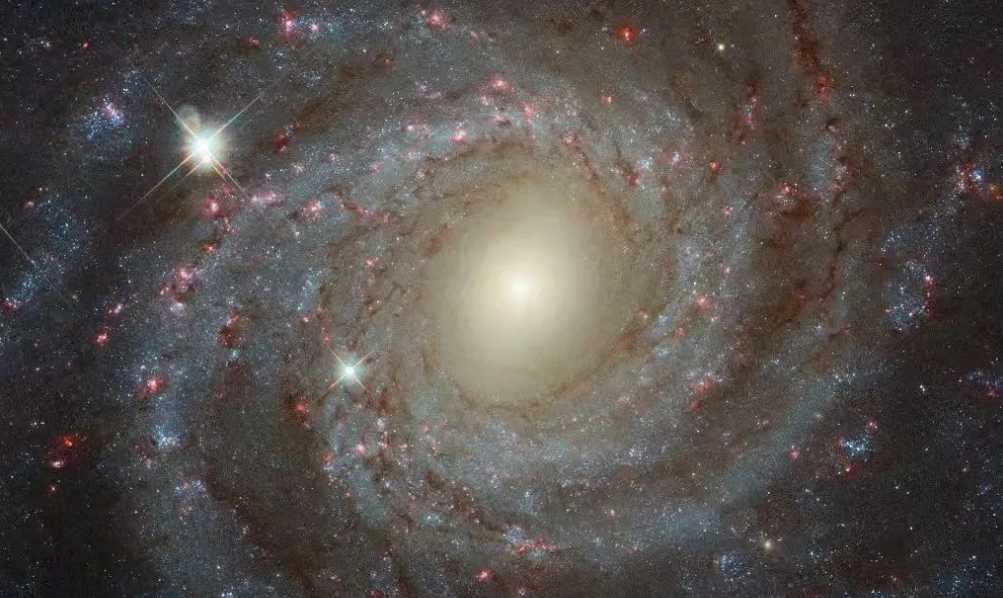
What’s happening to this spiral galaxy? The answer lies in its violent tango with a neighboring dwarf galaxy. At the center of this image, UGC 1810 forms the Arp 273 galaxy pair with its collision partner, showcasing a cosmic drama where gravity reshapes stellar landscapes. The most striking feature—UGC 1810’s outer blue ring—betrays the chaos of their gravitational battle, while the smaller companion galaxy appears distorted in the embrace.

Arp 273: A Cosmic Love Story of Colliding Galaxies in Andromeda
2 minute read

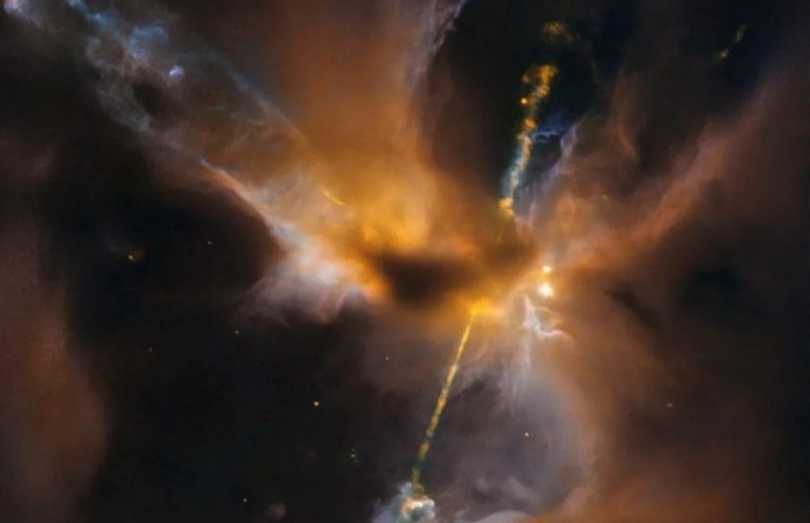
HH 24: The Cosmic 'Lightsaber' Jet from a Newborn Star in Orion

Resembling a double-bladed lightsaber, this stunning Hubble Space Telescope image captures Herbig-Haro 24 (HH 24)—a half-light-year-wide jet erupting from a newborn star in the Orion B molecular cloud complex, ~1,300 light-years (400 parsecs) from Earth. HH 24 exemplifies the violent beauty of star birth, where invisible forces carve luminous pathways through interstellar space.
HH 24: The Cosmic 'Lightsaber' Jet from a Newborn Star in Orion
1 minute read

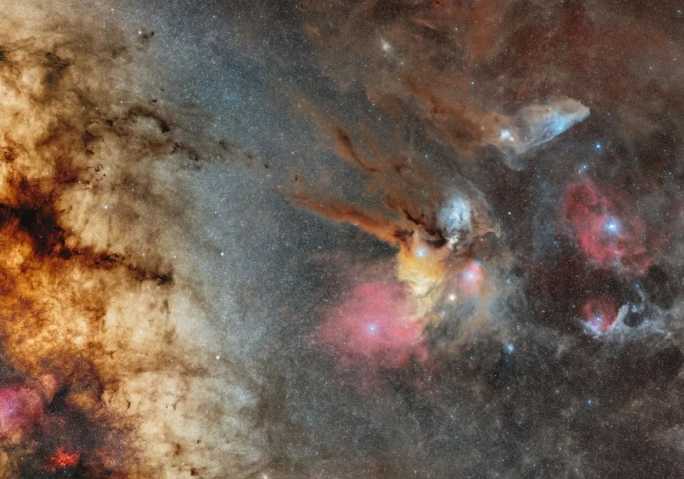
The Milky Way’s Most Beautiful Portrait: A 17-Hour Exposé of Cosmic Splendor

Stargazers and astrophotographers alike hail this deep-sky masterpiece as the Milky Way’s most stunning portrait. The image anchors viewers with a diagonally streaming galactic band in the lower-left, intersecting the vibrant Rho Ophiuchi Nebula at its center. Above, the dazzling red nebula of Zeta Ophiuchi floats like a cosmic flame, creating a triad of celestial wonders.
The Milky Way’s Most Beautiful Portrait: A 17-Hour Exposé of Cosmic Splendor
1 minute read

Jupiter’s Cosmic Wonders Unveiled by Juno: From Swirling Clouds to a Mysterious Core

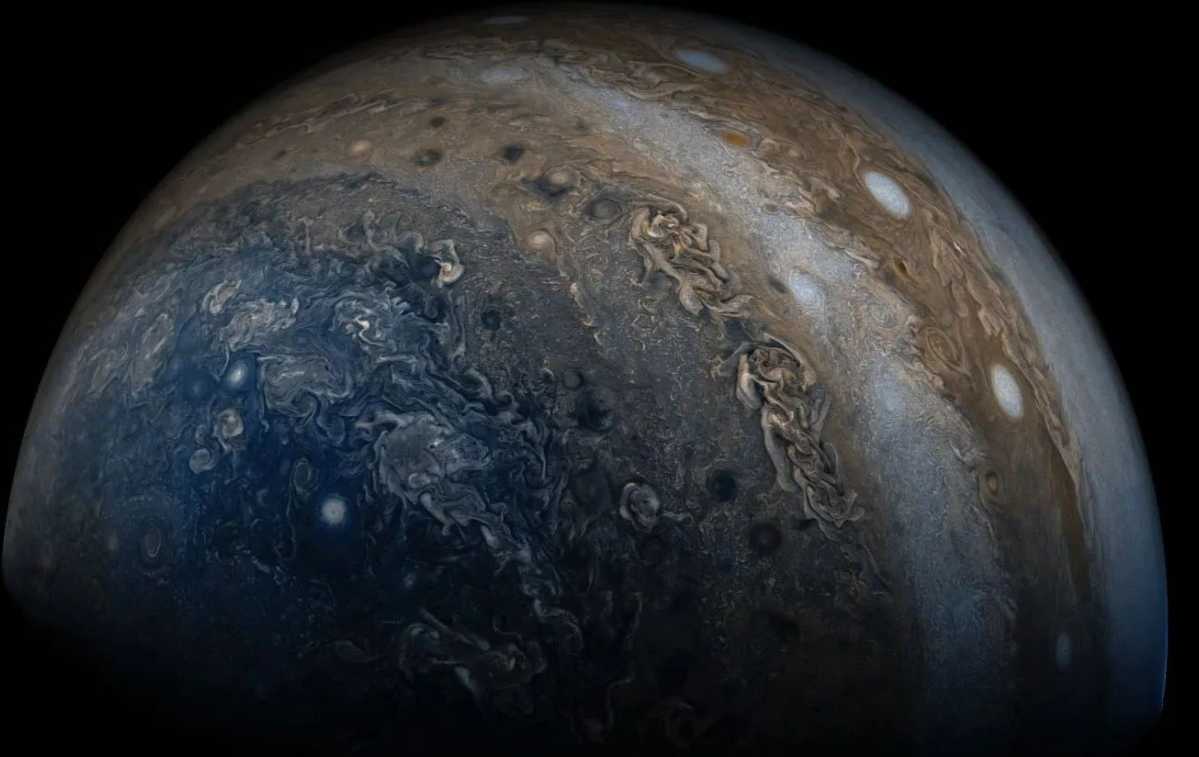
NASA’s Juno spacecraft, on its highly elliptical orbit around Jupiter, has completed over 70 close flybys, revealing the gas giant’s secrets. A 2017 image captured from below Jupiter’s equator shows horizontal cloud bands transforming into spectacular swirling vortices and intricate patterns, with a "string of pearls" array of white oval cloud formations near the equator. These views challenge all prior conceptions of Jupiter’s atmospheric dynamics.
Jupiter’s Cosmic Wonders Unveiled by Juno: From Swirling Clouds to a Mysterious Core
2 minute read

NGC 6366: A Rare Globular Cluster Defying Galactic Norms Near the Milky Way’s Plane

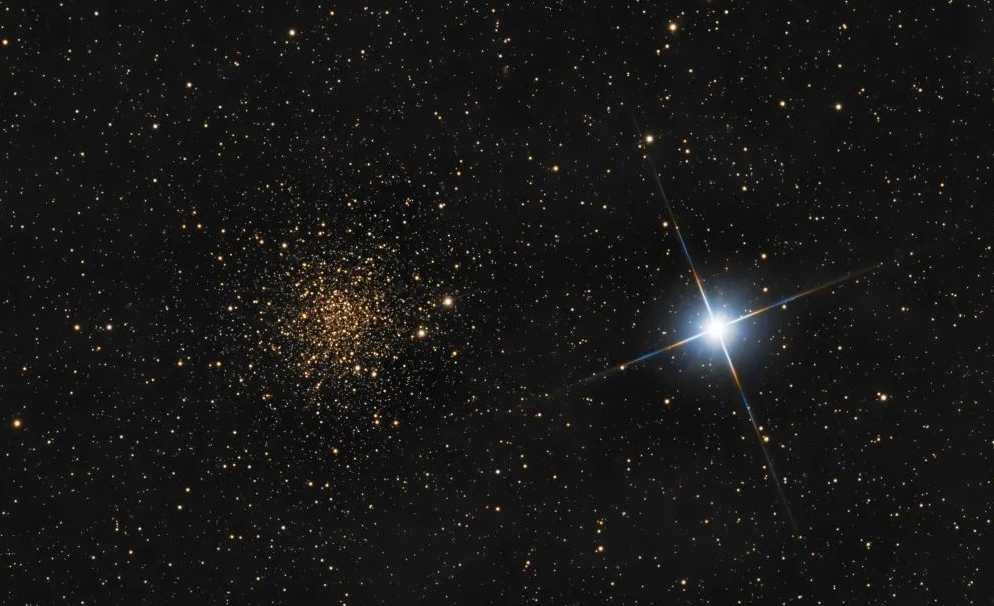
While most globular clusters orbit in the Milky Way’s outer halo, NGC 6366 stands out by lingering close to the galactic plane. Located ~12,000 light-years from Earth in Ophiuchus, the cluster’s starlight dims and reddens as it passes through interstellar dust—a phenomenon known as interstellar reddening. In this telescope image, NGC 6366’s golden stellar swarm contrasts sharply with the blue-white star 47 Ophiuchi, just 100 light-years away and visible as a bright point near the cluster’s edge.
NGC 6366: A Rare Globular Cluster Defying Galactic Norms Near the Milky Way’s Plane

Latest Stories
Feline News2 minute readThe Korat cat, originating from Thailand’s Nakhon Ratchasima province (formerly Korat), is a breed deeply rooted in history and cultural significance. Revered for centuries as a symbol of good luck and prosperity, these silver-blue felines have enchanted the world with their striking appearance and affectionate nature.
Feline News2 minute readThe Burmese cat, a breed steeped in history and adored for its regal charm, continues to captivate cat lovers worldwide. Originating from Myanmar (formerly Burma), these medium-sized shorthairs are celebrated for their luxurious coat, affectionate demeanor, and intelligence. Here’s an in-depth look at this ancient breed, combining the latest research and international standards
Feline News2 minute readThe Russian Blue, with its silvery-blue coat and piercing emerald eyes, stands as a paragon of feline elegance, earning the title "Noble of the Shorthairs" 5. Originating from Arkhangelsk Port in Russia—once known as the "Blue Angel Harbor"—this ancient breed derived its name not from color but from its birthplace 3. In 1860, sailors introduced them to Europe, and they debuted at London's Crystal Palace Exposition in 1875 as "Archangel Cats," captivating audiences with their otherworldly allure
Astro Information1 minute readEnceladus, Saturn’s icy moon, harbors a subsurface ocean beneath tiger-stripe fractures that erupt icy particles into space. These geysers form a dense ice cloud over the south pole, feeding Saturn’s faint E ring. The Cassini spacecraft (2004–2017) provided definitive evidence, capturing this true-color, high-resolution image during a close flyby, revealing shadowed ice chasms and active vents.
Animal Information1 minute readNative to Africa, warthogs (Phacochoerus) earn their name from the fleshy facial warts beneath their eyes. Split into the common warthog and desert warthog, these ungulates have heads comprising one-third of their body length, with tusks reaching 64 cm. They subsist on grass roots and tubers, surviving months without water—adaptations that define their harsh savanna lifestyle.
Astro Information2 minute readA close-up from NASA’s Mars Reconnaissance Orbiter (MRO) HiRISE camera unveils the weathered craters and aeolian features of southern Acidalia Planitia. While standard HiRISE imagery often appears in striking blue tones—a result of multispectral processing to enhance geological details—the region would likely appear gray or pale red to human eyes. Of course, no human has yet witnessed this Martian landscape firsthand—unless we count Andy Weir’s fictional NASA astronaut in The Martian.
Feline News1 minute readDubbed the "parlor panther," the Bombay Cat captivates with its jet-black coat and mesmerizing copper-gold eyes, an uncanny resemblance to the wild black leopard. Originating in 1958, Kentucky breeder Nikki Horner meticulously crossed sable Burmese cats with black American Shorthairs, aiming to create a domestic feline embodying both exotic allure and gentle temperament. After years of selective breeding, her vision became reality, establishing the Bombay as a breed that bridges wild aesthetics with affectionate companionship.