The Ladybug (Coccinellidae): Nature's Spotted Predator and Winter Intruder


Insect Information
The Ladybug (Coccinellidae): Nature's Spotted Predator and Winter Intruder

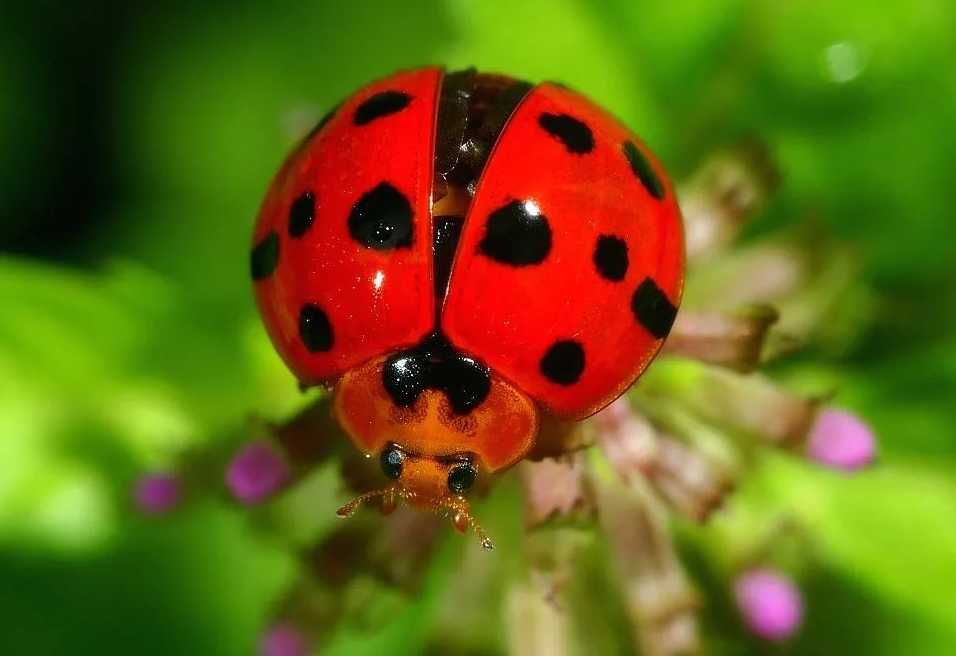
Ladybugs, members of the family Coccinellidae, are iconic insects recognized worldwide for their distinctive spotted exteriors. Typically adorned with red or yellow backs dotted in black, these beetles blend aesthetic appeal with remarkable ecological utility, serving as natural pest controllers in gardens and agricultural fields.

Morphology and Feeding Habits
Their rounded, dome-shaped bodies are adapted for agility and protection, with elytra that shield delicate wings. While the classic red-and-black pattern is most familiar, species vary in coloration—some display yellow, orange, or even black backgrounds with red spots. This diversity often signals chemical defenses: many ladybugs secrete a yellow, foul-smelling hemolymph from their leg joints when threatened, a behavior called reflex bleeding that deters predators. As voracious feeders, adults and larvae consume aphids, mealybugs, and mites, with a single ladybug capable of devouring up to 50 aphids daily—making them invaluable allies in biological pest control.


Seasonal Behavior and Human Interactions
When winter approaches, ladybugs exhibit mass aggregation behavior, seeking shelter in human dwellings to escape the cold. These clusters, sometimes numbering in the hundreds, can invade homes through cracks and crevices, earning them a reputation as unwelcome seasonal guests. While their presence is harmless, the reflex bleeding can stain surfaces, prompting homeowners to seal entry points. In some cultures, ladybugs are considered symbols of good luck, a belief that stems from their role in protecting crops—though their winter invasions often test this sentiment.


Ecological and Cultural Significance
Beyond pest control, ladybugs play a role in pollination and serve as prey for birds and spiders, anchoring food web dynamics. Their life cycle, from egg to larva to pupa to adult, showcases complete metamorphosis, captivating both children and entomologists. In popular culture, they inspire art, literature, and even fashion, while gardeners actively attract them by planting aphid-rich flowers or purchasing them for biological control. Despite their occasional winter intrusions, ladybugs remain beloved icons of nature’s balance—proof that beauty and functionality can coexist in the smallest of creatures.
Latest Stories
Feline News2 minute readThe Korat cat, originating from Thailand’s Nakhon Ratchasima province (formerly Korat), is a breed deeply rooted in history and cultural significance. Revered for centuries as a symbol of good luck and prosperity, these silver-blue felines have enchanted the world with their striking appearance and affectionate nature.
Feline News2 minute readThe Burmese cat, a breed steeped in history and adored for its regal charm, continues to captivate cat lovers worldwide. Originating from Myanmar (formerly Burma), these medium-sized shorthairs are celebrated for their luxurious coat, affectionate demeanor, and intelligence. Here’s an in-depth look at this ancient breed, combining the latest research and international standards
Feline News2 minute readThe Russian Blue, with its silvery-blue coat and piercing emerald eyes, stands as a paragon of feline elegance, earning the title "Noble of the Shorthairs" 5. Originating from Arkhangelsk Port in Russia—once known as the "Blue Angel Harbor"—this ancient breed derived its name not from color but from its birthplace 3. In 1860, sailors introduced them to Europe, and they debuted at London's Crystal Palace Exposition in 1875 as "Archangel Cats," captivating audiences with their otherworldly allure
Astro Information1 minute readEnceladus, Saturn’s icy moon, harbors a subsurface ocean beneath tiger-stripe fractures that erupt icy particles into space. These geysers form a dense ice cloud over the south pole, feeding Saturn’s faint E ring. The Cassini spacecraft (2004–2017) provided definitive evidence, capturing this true-color, high-resolution image during a close flyby, revealing shadowed ice chasms and active vents.
Animal Information1 minute readNative to Africa, warthogs (Phacochoerus) earn their name from the fleshy facial warts beneath their eyes. Split into the common warthog and desert warthog, these ungulates have heads comprising one-third of their body length, with tusks reaching 64 cm. They subsist on grass roots and tubers, surviving months without water—adaptations that define their harsh savanna lifestyle.
Astro Information2 minute readA close-up from NASA’s Mars Reconnaissance Orbiter (MRO) HiRISE camera unveils the weathered craters and aeolian features of southern Acidalia Planitia. While standard HiRISE imagery often appears in striking blue tones—a result of multispectral processing to enhance geological details—the region would likely appear gray or pale red to human eyes. Of course, no human has yet witnessed this Martian landscape firsthand—unless we count Andy Weir’s fictional NASA astronaut in The Martian.
Feline News1 minute readDubbed the "parlor panther," the Bombay Cat captivates with its jet-black coat and mesmerizing copper-gold eyes, an uncanny resemblance to the wild black leopard. Originating in 1958, Kentucky breeder Nikki Horner meticulously crossed sable Burmese cats with black American Shorthairs, aiming to create a domestic feline embodying both exotic allure and gentle temperament. After years of selective breeding, her vision became reality, establishing the Bombay as a breed that bridges wild aesthetics with affectionate companionship.