The Axolotl: Mexico’s Remarkable 'Walking Fish' and Genetic Marvel


Animal Information
The Axolotl: Mexico’s Remarkable 'Walking Fish' and Genetic Marvel

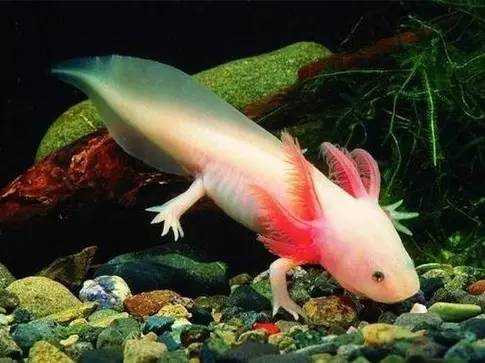
Native to the freshwater lakes of Mexico City, the axolotl (Ambystoma mexicanum) is a salamander unlike any other—renowned for its permanent larval form, vibrant pinkish hue, and extraordinary regenerative abilities. Often called the "walking fish" due to its aquatic lifestyle, this critically endangered species has captivated scientists for centuries, serving as a key model in developmental biology.

Perpetual Youth and Regenerative Superpowers

  • Neoteny: Stuck in Adolescence
    Unlike most salamanders, axolotls never undergo metamorphosis, retaining gills, a tail fin, and larval features throughout their lives. This trait, called neoteny, allows them to reproduce while still in their larval stage, a rare adaptation in vertebrates.
  • Regrowth on Demand
    The axolotl’s most iconic ability is regrowing entire limbs, spinal cord segments, eyes, and even parts of the brain without scarring. Researchers have identified genes like Pax3 and Msx1 that drive this process, inspiring studies on human tissue regeneration. Their cells maintain a unique "memory" of original structures, guiding precise rebuilding.

Appearance and Cultural Significance

  • Distinctive Features
    With a stocky body reaching 20–30 cm, feathery external gills, and a wide, lidless smile, axolotls have a permanently juvenile appearance. Wild individuals are typically dark brown with gold speckles, while captive-bred ones range from albino pink to leucistic white. Their paddle-like feet allow them to "walk" along lake bottoms, hunting worms, insects, and small fish.
  • Aztec Roots and Modern Peril
    In Aztec culture, the axolotl was associated with the god Xolotl, symbolizing death and rebirth. Today, it faces existential threats: urbanization has drained its native lakes, invasive fish like tilapia prey on eggs, and water pollution disrupts its habitat. Once abundant in Lake Xochimilco, fewer than 1,000 individuals may remain in the wild, though thousands exist in laboratories and aquariums.

Scientific Hope and Conservation Efforts

  • Lab Star and Genetic Goldmine
    Axolotls were the first amphibians to have their genome sequenced (32 billion base pairs, 10 times larger than the human genome), revealing secrets of regeneration. Their cells are used to study cancer, spinal cord injuries, and aging.
  • Saving the 'Water Monster'
    Mexican conservationists are restoring wetland habitats, breeding axolotls in captivity for reintroduction, and educating locals about their importance. The species is listed as "Critically Endangered" by the IUCN, with organizations like the Axolotl Survival Consortium leading efforts to prevent its extinction.


As a living link to ancient Mexican ecosystems and a biological wonder, the axolotl embodies both the fragility and resilience of life. Its ability to regrow what’s lost serves as a metaphor for hope in conservation—and a reminder that even in the most urbanized corners of the world, nature’s miracles may still be saved.

Latest Stories
Feline News2 minute readThe Korat cat, originating from Thailand’s Nakhon Ratchasima province (formerly Korat), is a breed deeply rooted in history and cultural significance. Revered for centuries as a symbol of good luck and prosperity, these silver-blue felines have enchanted the world with their striking appearance and affectionate nature.
Feline News2 minute readThe Burmese cat, a breed steeped in history and adored for its regal charm, continues to captivate cat lovers worldwide. Originating from Myanmar (formerly Burma), these medium-sized shorthairs are celebrated for their luxurious coat, affectionate demeanor, and intelligence. Here’s an in-depth look at this ancient breed, combining the latest research and international standards
Feline News2 minute readThe Russian Blue, with its silvery-blue coat and piercing emerald eyes, stands as a paragon of feline elegance, earning the title "Noble of the Shorthairs" 5. Originating from Arkhangelsk Port in Russia—once known as the "Blue Angel Harbor"—this ancient breed derived its name not from color but from its birthplace 3. In 1860, sailors introduced them to Europe, and they debuted at London's Crystal Palace Exposition in 1875 as "Archangel Cats," captivating audiences with their otherworldly allure
Astro Information1 minute readEnceladus, Saturn’s icy moon, harbors a subsurface ocean beneath tiger-stripe fractures that erupt icy particles into space. These geysers form a dense ice cloud over the south pole, feeding Saturn’s faint E ring. The Cassini spacecraft (2004–2017) provided definitive evidence, capturing this true-color, high-resolution image during a close flyby, revealing shadowed ice chasms and active vents.
Animal Information1 minute readNative to Africa, warthogs (Phacochoerus) earn their name from the fleshy facial warts beneath their eyes. Split into the common warthog and desert warthog, these ungulates have heads comprising one-third of their body length, with tusks reaching 64 cm. They subsist on grass roots and tubers, surviving months without water—adaptations that define their harsh savanna lifestyle.
Astro Information2 minute readA close-up from NASA’s Mars Reconnaissance Orbiter (MRO) HiRISE camera unveils the weathered craters and aeolian features of southern Acidalia Planitia. While standard HiRISE imagery often appears in striking blue tones—a result of multispectral processing to enhance geological details—the region would likely appear gray or pale red to human eyes. Of course, no human has yet witnessed this Martian landscape firsthand—unless we count Andy Weir’s fictional NASA astronaut in The Martian.
Feline News1 minute readDubbed the "parlor panther," the Bombay Cat captivates with its jet-black coat and mesmerizing copper-gold eyes, an uncanny resemblance to the wild black leopard. Originating in 1958, Kentucky breeder Nikki Horner meticulously crossed sable Burmese cats with black American Shorthairs, aiming to create a domestic feline embodying both exotic allure and gentle temperament. After years of selective breeding, her vision became reality, establishing the Bombay as a breed that bridges wild aesthetics with affectionate companionship.