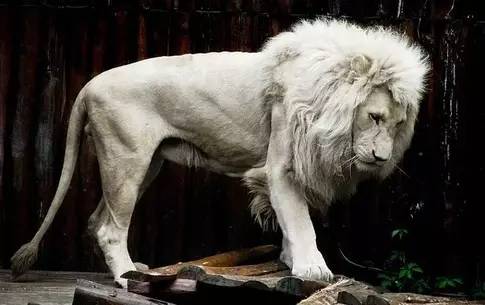
The Albino Lion: Rare Genetic Marvel and Cultural Icon of the Savanna


Animal Information
The Albino Lion: Rare Genetic Marvel and Cultural Icon of the Savanna

Albino lions, though often mistaken for white lions, are a distinct genetic rarity characterized by complete lack of melanin, resulting in pure white fur, pink skin, and pale blue or red eyes. Unlike white lions (which have a recessive color gene), albinism in lions is caused by a mutation in the TYR gene, inhibiting tyrosinase production—a enzyme crucial for pigment formation. These majestic creatures have captivated humanity for centuries, blending scientific curiosity with cultural mystique.

The Science Behind the Paleness: Genetic Anomalies

  • Pigmentation Breakdown
    Albino lions exhibit oculocutaneous albinism (OCA), a condition affecting both skin and eye pigment. Their white coat offers no camouflage, making hunting challenging, while light sensitivity (photophobia) from unpigmented eyes hinders vision in bright savanna sunlight. In the wild, albinism reduces survival rates, as cubs are more vulnerable to predators and struggle to hunt.
  • Physical Traits
    Aside from coloration, albino lions share typical lion anatomy: males grow up to 250 kg with a (white) mane, while females are smaller and maneless. Their rarity—estimated at 1 in 100,000 wild lions—makes them extremely scarce, with most sightings documented in southern Africa’s Kruger National Park and private reserves.

Cultural Significance and Conservation Realities

  • Myth vs. Reality
    In African folklore, albino lions are often seen as spiritual beings, symbols of luck or omens. The Tsonga people of South Africa refer to them as "ghost lions," believing they bridge the human and spirit worlds. However, this mystique has also fueled superstitions; in some regions, albino animals are hunted for use in traditional medicine, posing an additional threat.
  • Captive vs. Wild Survival
    Most albino lions today exist in captivity, where breeders sometimes exploit their rarity for tourism. Wild populations face dual risks: genetic inbreeding (as albinism requires two recessive genes) and habitat loss. Conservationists stress that while albino lions are fascinating, efforts must prioritize protecting overall lion populations, whose numbers have declined by 43% since 1993.


As living symbols of genetic wonder, albino lions highlight the fragility of nature’s diversity. Their existence challenges humanity to appreciate rarity not for exploitation, but as a reminder of the intricate web of life—where even the rarest mutations hold value in the grand tapestry of evolution.
Latest Stories
Feline News2 minute readThe Korat cat, originating from Thailand’s Nakhon Ratchasima province (formerly Korat), is a breed deeply rooted in history and cultural significance. Revered for centuries as a symbol of good luck and prosperity, these silver-blue felines have enchanted the world with their striking appearance and affectionate nature.
Feline News2 minute readThe Burmese cat, a breed steeped in history and adored for its regal charm, continues to captivate cat lovers worldwide. Originating from Myanmar (formerly Burma), these medium-sized shorthairs are celebrated for their luxurious coat, affectionate demeanor, and intelligence. Here’s an in-depth look at this ancient breed, combining the latest research and international standards
Feline News2 minute readThe Russian Blue, with its silvery-blue coat and piercing emerald eyes, stands as a paragon of feline elegance, earning the title "Noble of the Shorthairs" 5. Originating from Arkhangelsk Port in Russia—once known as the "Blue Angel Harbor"—this ancient breed derived its name not from color but from its birthplace 3. In 1860, sailors introduced them to Europe, and they debuted at London's Crystal Palace Exposition in 1875 as "Archangel Cats," captivating audiences with their otherworldly allure
Astro Information1 minute readEnceladus, Saturn’s icy moon, harbors a subsurface ocean beneath tiger-stripe fractures that erupt icy particles into space. These geysers form a dense ice cloud over the south pole, feeding Saturn’s faint E ring. The Cassini spacecraft (2004–2017) provided definitive evidence, capturing this true-color, high-resolution image during a close flyby, revealing shadowed ice chasms and active vents.
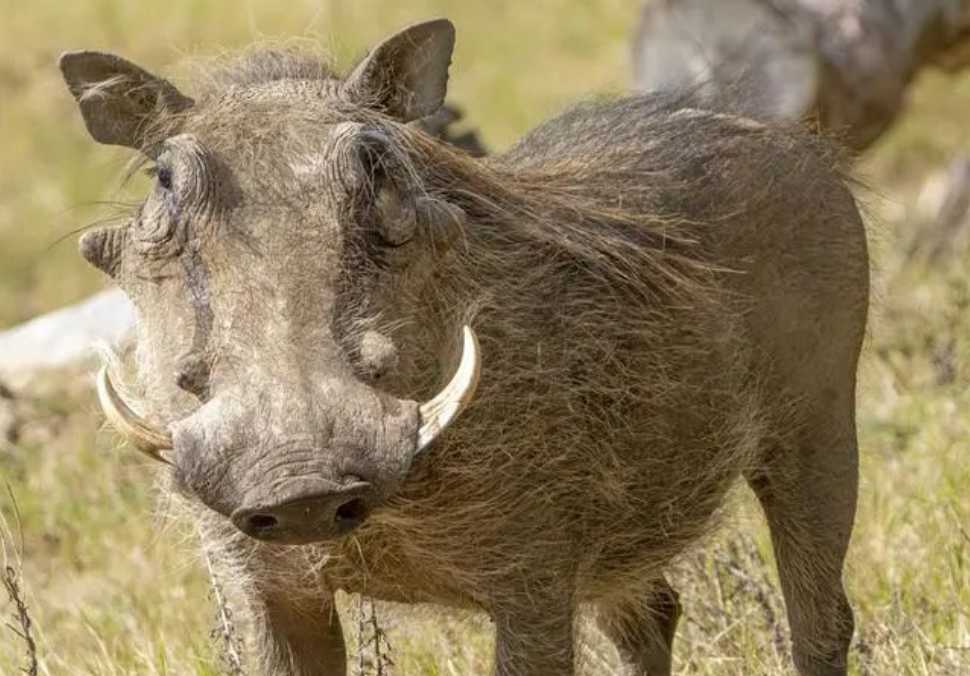
Animal Information1 minute readNative to Africa, warthogs (Phacochoerus) earn their name from the fleshy facial warts beneath their eyes. Split into the common warthog and desert warthog, these ungulates have heads comprising one-third of their body length, with tusks reaching 64 cm. They subsist on grass roots and tubers, surviving months without water—adaptations that define their harsh savanna lifestyle.
Astro Information2 minute readA close-up from NASA’s Mars Reconnaissance Orbiter (MRO) HiRISE camera unveils the weathered craters and aeolian features of southern Acidalia Planitia. While standard HiRISE imagery often appears in striking blue tones—a result of multispectral processing to enhance geological details—the region would likely appear gray or pale red to human eyes. Of course, no human has yet witnessed this Martian landscape firsthand—unless we count Andy Weir’s fictional NASA astronaut in The Martian.
Feline News1 minute readDubbed the "parlor panther," the Bombay Cat captivates with its jet-black coat and mesmerizing copper-gold eyes, an uncanny resemblance to the wild black leopard. Originating in 1958, Kentucky breeder Nikki Horner meticulously crossed sable Burmese cats with black American Shorthairs, aiming to create a domestic feline embodying both exotic allure and gentle temperament. After years of selective breeding, her vision became reality, establishing the Bombay as a breed that bridges wild aesthetics with affectionate companionship.