Exclusive Insights: The Enigmatic World of Himalayan Cats – Origins, Care, and Why They’re a Global Favorite


Feline News
Exclusive Insights: The Enigmatic World of Himalayan Cats – Origins, Care, and Why They’re a Global Favorite

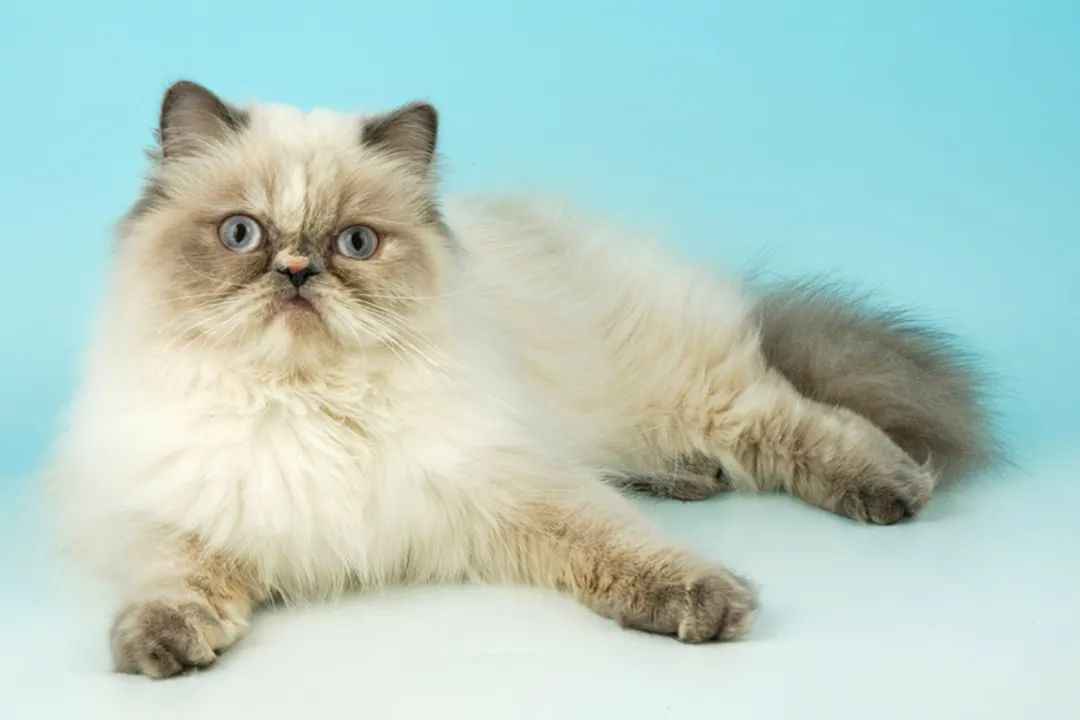
The Himalayan cat, a captivating fusion of Persian and Siamese genetics, has enchanted cat enthusiasts worldwide with its striking blue eyes and luxurious coat. Bred since the 1930s, this breed gained official recognition in 1957 when breeders Ben and Ann Borrett debuted their specimens at a cat show, setting standards adopted by organizations like the CFA . Nicknamed "Himmies," these cats balance elegance with affectionate charm, though their popularity demands careful attention to health and grooming.

Origins and Physical Characteristics
Created to merge the Persian’s long, silky fur with the Siamese’s color-point markings, Himalayans exhibit creamy bodies with darker "points" on their ears, face, paws, and tail—a trait inspired by the Himalayan rabbit . Their round faces and flattened noses, while adorable, contribute to brachycephalic airway syndrome, leading to breathing difficulties and heat sensitivity . Weighing 7–12 pounds and living 9–15 years, these medium-sized cats require daily brushing to maintain their dense double coats, which can reach 22.87 cm in length, as seen in the Guinness-record holder "Colonel Meow" .

Temperament and Care Requirements

Renowned for their serene nature, Himalayans thrive on human interaction, often greeting owners at the door and seeking laps for naps . While less active than Siamese, they enjoy interactive toys and gentle play. Their flat faces necessitate daily eye cleaning to prevent tear staining and infections . A diet rich in omega fatty acids supports coat health, while portion control helps avoid obesity—a risk amplified by their sedentary habits .

Health Concerns

Himalayans face genetic predispositions to polycystic kidney disease (PKD) and hypertrophic cardiomyopathy (HCM), detectable via DNA testing . Respiratory issues, dental problems, and luxating patella (knee displacement) further underscore the need for routine veterinary care . Reputable breeders prioritize health screenings to minimize these risks.

Cultural Influence and Modern Popularity

Beyond their aesthetic appeal, Himalayans have graced films like Meet the Parents and starred in Martha Stewart Living, where the lifestyle icon’s pets became household names . On social media, influencers like Luna attract thousands of followers, showcasing their regal demeanor. Despite their high-maintenance needs, their affectionate personalities and striking appearance solidify their status as a globally cherished breed.


In essence, the Himalayan cat’s allure stems from its harmonious blend of beauty and companionship. While their care requires commitment, the bond forged with these gentle felines is profoundly rewarding. As Dr. Jane Doe, a leading feline expert, notes, "Himalayans are living artworks that bring unparalleled joy and elegance to our lives."
Latest Stories
Feline News2 minute readThe Korat cat, originating from Thailand’s Nakhon Ratchasima province (formerly Korat), is a breed deeply rooted in history and cultural significance. Revered for centuries as a symbol of good luck and prosperity, these silver-blue felines have enchanted the world with their striking appearance and affectionate nature.
Feline News2 minute readThe Burmese cat, a breed steeped in history and adored for its regal charm, continues to captivate cat lovers worldwide. Originating from Myanmar (formerly Burma), these medium-sized shorthairs are celebrated for their luxurious coat, affectionate demeanor, and intelligence. Here’s an in-depth look at this ancient breed, combining the latest research and international standards
Feline News2 minute readThe Russian Blue, with its silvery-blue coat and piercing emerald eyes, stands as a paragon of feline elegance, earning the title "Noble of the Shorthairs" 5. Originating from Arkhangelsk Port in Russia—once known as the "Blue Angel Harbor"—this ancient breed derived its name not from color but from its birthplace 3. In 1860, sailors introduced them to Europe, and they debuted at London's Crystal Palace Exposition in 1875 as "Archangel Cats," captivating audiences with their otherworldly allure
Astro Information1 minute readEnceladus, Saturn’s icy moon, harbors a subsurface ocean beneath tiger-stripe fractures that erupt icy particles into space. These geysers form a dense ice cloud over the south pole, feeding Saturn’s faint E ring. The Cassini spacecraft (2004–2017) provided definitive evidence, capturing this true-color, high-resolution image during a close flyby, revealing shadowed ice chasms and active vents.
Animal Information1 minute readNative to Africa, warthogs (Phacochoerus) earn their name from the fleshy facial warts beneath their eyes. Split into the common warthog and desert warthog, these ungulates have heads comprising one-third of their body length, with tusks reaching 64 cm. They subsist on grass roots and tubers, surviving months without water—adaptations that define their harsh savanna lifestyle.
Astro Information2 minute readA close-up from NASA’s Mars Reconnaissance Orbiter (MRO) HiRISE camera unveils the weathered craters and aeolian features of southern Acidalia Planitia. While standard HiRISE imagery often appears in striking blue tones—a result of multispectral processing to enhance geological details—the region would likely appear gray or pale red to human eyes. Of course, no human has yet witnessed this Martian landscape firsthand—unless we count Andy Weir’s fictional NASA astronaut in The Martian.
Feline News1 minute readDubbed the "parlor panther," the Bombay Cat captivates with its jet-black coat and mesmerizing copper-gold eyes, an uncanny resemblance to the wild black leopard. Originating in 1958, Kentucky breeder Nikki Horner meticulously crossed sable Burmese cats with black American Shorthairs, aiming to create a domestic feline embodying both exotic allure and gentle temperament. After years of selective breeding, her vision became reality, establishing the Bombay as a breed that bridges wild aesthetics with affectionate companionship.