Pumi: Hungary's Versatile Herding Dog Conquers Global Stages


Canine News
Pumi: Hungary's Versatile Herding Dog Conquers Global Stages

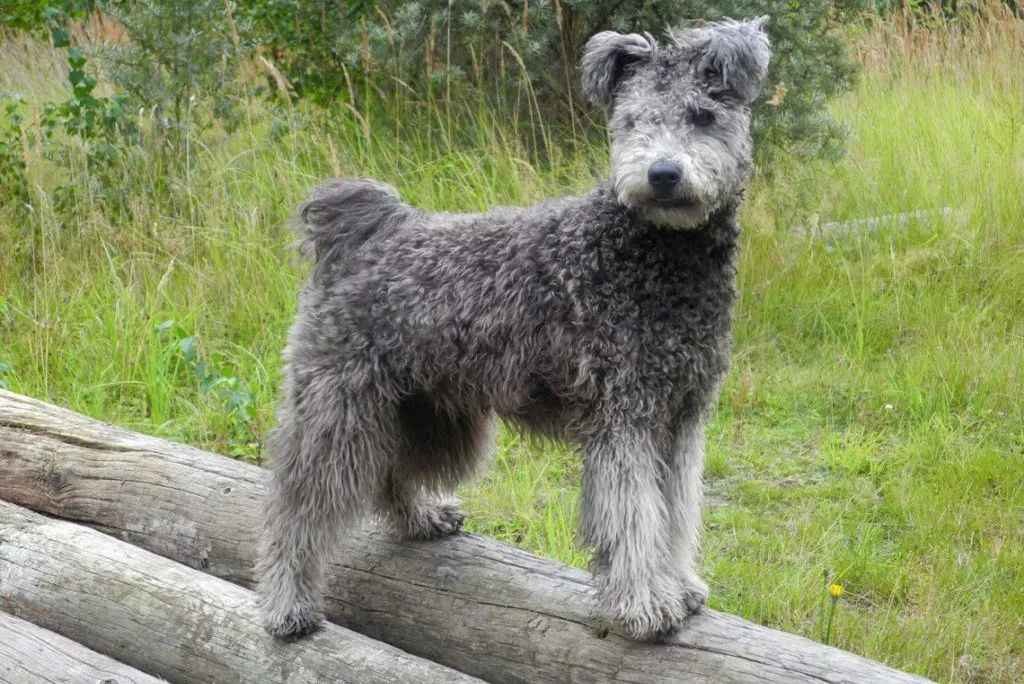
The Pumi, one of Hungary’s oldest herding breeds, has recently drawn international attention for its exceptional working abilities and lively demeanor. Originating in the 17th century, this breed was developed by crossing the Puli with European herding dogs and terriers, initially tasked with driving cattle and sheep through narrow pastures23. In 2016, the American Kennel Club (AKC) officially recognized the Pumi as its 190th breed, marking a significant milestone in its transition from traditional farms to the global spotlight1


A Perfect Blend of Playfulness and Intelligence
Standing at 43-45 cm (males) and 40-42 cm (females), the Pumi features a distinctive curly coat and upright "bunny-like" ears, giving it a whimsical appearance38. Its dense, non-shedding fur comes in solid colors like black, white, gray, or blended tones, requiring regular brushing to maintain its signature curls310. As a herder, the Pumi demonstrates remarkable agility and fearlessness, capable of independently managing livestock across challenging terrains313. While highly trainable and loyal to its family, it remains cautious with strangers, necessitating early socialization to foster friendliness39.


Dual Roles: Working Dog and Beloved Companion
In Hungarian rural areas, the Pumi continues to excel as an efficient livestock handler, using barking and gentle nipping to guide animals38. Its energetic nature has also made it a popular family pet, particularly in Nordic countries like Finland35. As a companion, the Pumi thrives on outdoor activities, excelling in agility training, frisbee chasing, and even swimming913. However, its herding instincts may lead to attempts to "control" children or other pets, requiring positive reinforcement training to curb such behaviors912.


Health and Care: A Long-Lived and Low-Maintenance Breed
With a lifespan of 12-14 years, the Pumi is generally healthy, though hip dysplasia and primary lens luxation are potential concerns1012. Grooming involves brushing every 3-6 weeks to preserve its curls, with minimal trimming needed1013. To prevent boredom-related issues, daily exercise—such as jogging or interactive play—is essential for channeling its boundless energy913.


Global Impact: From Westminster to Finnish Fame
Since AKC recognition, the Pumi has debuted at prestigious events like the Westminster Kennel Club Dog Show, captivating judges with its agility and charisma1. In Finland, it has become the most beloved Hungarian herding breed, celebrated equally for its working prowess and companionship35. As its unique appeal spreads, the Pumi is evolving from a regional specialty to a globally recognized versatile canine partner.
Latest Stories
Feline News2 minute readThe Korat cat, originating from Thailand’s Nakhon Ratchasima province (formerly Korat), is a breed deeply rooted in history and cultural significance. Revered for centuries as a symbol of good luck and prosperity, these silver-blue felines have enchanted the world with their striking appearance and affectionate nature.
Feline News2 minute readThe Burmese cat, a breed steeped in history and adored for its regal charm, continues to captivate cat lovers worldwide. Originating from Myanmar (formerly Burma), these medium-sized shorthairs are celebrated for their luxurious coat, affectionate demeanor, and intelligence. Here’s an in-depth look at this ancient breed, combining the latest research and international standards
Feline News2 minute readThe Russian Blue, with its silvery-blue coat and piercing emerald eyes, stands as a paragon of feline elegance, earning the title "Noble of the Shorthairs" 5. Originating from Arkhangelsk Port in Russia—once known as the "Blue Angel Harbor"—this ancient breed derived its name not from color but from its birthplace 3. In 1860, sailors introduced them to Europe, and they debuted at London's Crystal Palace Exposition in 1875 as "Archangel Cats," captivating audiences with their otherworldly allure
Astro Information1 minute readEnceladus, Saturn’s icy moon, harbors a subsurface ocean beneath tiger-stripe fractures that erupt icy particles into space. These geysers form a dense ice cloud over the south pole, feeding Saturn’s faint E ring. The Cassini spacecraft (2004–2017) provided definitive evidence, capturing this true-color, high-resolution image during a close flyby, revealing shadowed ice chasms and active vents.
Animal Information1 minute readNative to Africa, warthogs (Phacochoerus) earn their name from the fleshy facial warts beneath their eyes. Split into the common warthog and desert warthog, these ungulates have heads comprising one-third of their body length, with tusks reaching 64 cm. They subsist on grass roots and tubers, surviving months without water—adaptations that define their harsh savanna lifestyle.
Astro Information2 minute readA close-up from NASA’s Mars Reconnaissance Orbiter (MRO) HiRISE camera unveils the weathered craters and aeolian features of southern Acidalia Planitia. While standard HiRISE imagery often appears in striking blue tones—a result of multispectral processing to enhance geological details—the region would likely appear gray or pale red to human eyes. Of course, no human has yet witnessed this Martian landscape firsthand—unless we count Andy Weir’s fictional NASA astronaut in The Martian.
Feline News1 minute readDubbed the "parlor panther," the Bombay Cat captivates with its jet-black coat and mesmerizing copper-gold eyes, an uncanny resemblance to the wild black leopard. Originating in 1958, Kentucky breeder Nikki Horner meticulously crossed sable Burmese cats with black American Shorthairs, aiming to create a domestic feline embodying both exotic allure and gentle temperament. After years of selective breeding, her vision became reality, establishing the Bombay as a breed that bridges wild aesthetics with affectionate companionship.