Norwegian Buhund: The Loyal Guardian of Nordic Millennium Farms


Canine News
Norwegian Buhund: The Loyal Guardian of Nordic Millennium Farms

The Norwegian Buhund, an ancient breed tracing back to the Viking era, continues to safeguard Nordic lands with its tenacity and intelligence. Archaeological findings reveal that its ancestors voyaged with Viking pirates and were buried alongside their owners in Viking tombs dating to 900 AD. The term "Buhund" in Norwegian translates to "farm dog," aptly summarizing its historical role as a versatile working dog—herding livestock, guarding farms, and even fending off predators like bears and wolves


Perfect Fusion of Ancient Genes and Modern Vitality

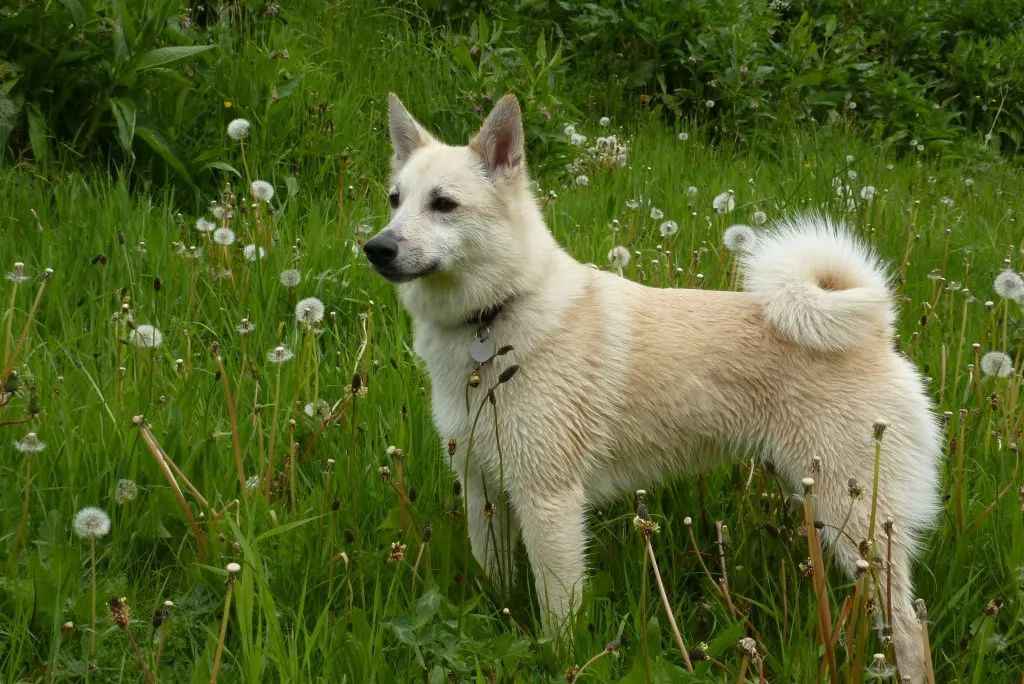
As a medium-sized breed, the Norwegian Buhund exhibits classic Nordic Spitz characteristics: a wedge-shaped head, erect pointed ears, and a dense double coat primarily in wheat or black, with minimal white markings on the chest and feet. Its muscular build and tightly curled tail not only adapt to frigid climates but also enable agile herding. Adult dogs weigh 24–49 pounds (11–22 kg), stand 16–19 inches (41–48 cm) tall, and have a lifespan of 12–15 years.

A Loyal and Intelligent Family Companion

Known for the confident and alert demeanor, Buhunds possess an innate guarding instinct, using barking to alert owners to unusual activity. Unlike aggressive breeds, they are friendly toward family and other animals, often humorously attempting to "herd" children or pets. As descendants of working dogs, they require over 90 minutes of daily high-intensity exercise, such as hiking, swimming, or agility training. Their high intelligence facilitates training, though positive reinforcement is key to avoid distraction from repetitive commands.

From Viking Ships to Diverse Roles in Modern Society

Historically indispensable to farmers, Norwegian Buhunds now excel in roles like police dogs and service animals. A 2008 ruling by Norway’s Supreme Court granted police dogs civil servant status, treating attacks on them as equivalent to assaulting a police officer—highlighting the breed’s social value. Today, they also serve in search-and-rescue, therapy work, and international dog shows like those hosted by the AKC.

Health and Care Essentials

While generally robust, Buhunds require monitoring for genetic issues like hip dysplasia and hereditary ataxia. Regular brushing reduces shedding during seasonal molts, and weekly grooming—paired with ear cleaning and nail trimming—maintains their health. A balanced diet and ample exercise prevent obesity; experts recommend 1–2 cups of professional dog food daily, with limited treats.

From Viking ships to modern city streets, the Norwegian Buhund embodies the timeless spirit of the "farm guardian" through unwavering loyalty and vitality. Whether as a working partner or family pet, this ancient breed continues to script a millennium-spanning legend.
 
 
Latest Stories
Feline News2 minute readThe Korat cat, originating from Thailand’s Nakhon Ratchasima province (formerly Korat), is a breed deeply rooted in history and cultural significance. Revered for centuries as a symbol of good luck and prosperity, these silver-blue felines have enchanted the world with their striking appearance and affectionate nature.
Feline News2 minute readThe Burmese cat, a breed steeped in history and adored for its regal charm, continues to captivate cat lovers worldwide. Originating from Myanmar (formerly Burma), these medium-sized shorthairs are celebrated for their luxurious coat, affectionate demeanor, and intelligence. Here’s an in-depth look at this ancient breed, combining the latest research and international standards
Feline News2 minute readThe Russian Blue, with its silvery-blue coat and piercing emerald eyes, stands as a paragon of feline elegance, earning the title "Noble of the Shorthairs" 5. Originating from Arkhangelsk Port in Russia—once known as the "Blue Angel Harbor"—this ancient breed derived its name not from color but from its birthplace 3. In 1860, sailors introduced them to Europe, and they debuted at London's Crystal Palace Exposition in 1875 as "Archangel Cats," captivating audiences with their otherworldly allure
Astro Information1 minute readEnceladus, Saturn’s icy moon, harbors a subsurface ocean beneath tiger-stripe fractures that erupt icy particles into space. These geysers form a dense ice cloud over the south pole, feeding Saturn’s faint E ring. The Cassini spacecraft (2004–2017) provided definitive evidence, capturing this true-color, high-resolution image during a close flyby, revealing shadowed ice chasms and active vents.
Animal Information1 minute readNative to Africa, warthogs (Phacochoerus) earn their name from the fleshy facial warts beneath their eyes. Split into the common warthog and desert warthog, these ungulates have heads comprising one-third of their body length, with tusks reaching 64 cm. They subsist on grass roots and tubers, surviving months without water—adaptations that define their harsh savanna lifestyle.
Astro Information2 minute readA close-up from NASA’s Mars Reconnaissance Orbiter (MRO) HiRISE camera unveils the weathered craters and aeolian features of southern Acidalia Planitia. While standard HiRISE imagery often appears in striking blue tones—a result of multispectral processing to enhance geological details—the region would likely appear gray or pale red to human eyes. Of course, no human has yet witnessed this Martian landscape firsthand—unless we count Andy Weir’s fictional NASA astronaut in The Martian.
Feline News1 minute readDubbed the "parlor panther," the Bombay Cat captivates with its jet-black coat and mesmerizing copper-gold eyes, an uncanny resemblance to the wild black leopard. Originating in 1958, Kentucky breeder Nikki Horner meticulously crossed sable Burmese cats with black American Shorthairs, aiming to create a domestic feline embodying both exotic allure and gentle temperament. After years of selective breeding, her vision became reality, establishing the Bombay as a breed that bridges wild aesthetics with affectionate companionship.