Lagotto Romagnolo: The Ancient Italian Water Dog’s Evolution from Hunter to Beloved Companion


Canine News
Lagotto Romagnolo: The Ancient Italian Water Dog’s Evolution from Hunter to Beloved Companion

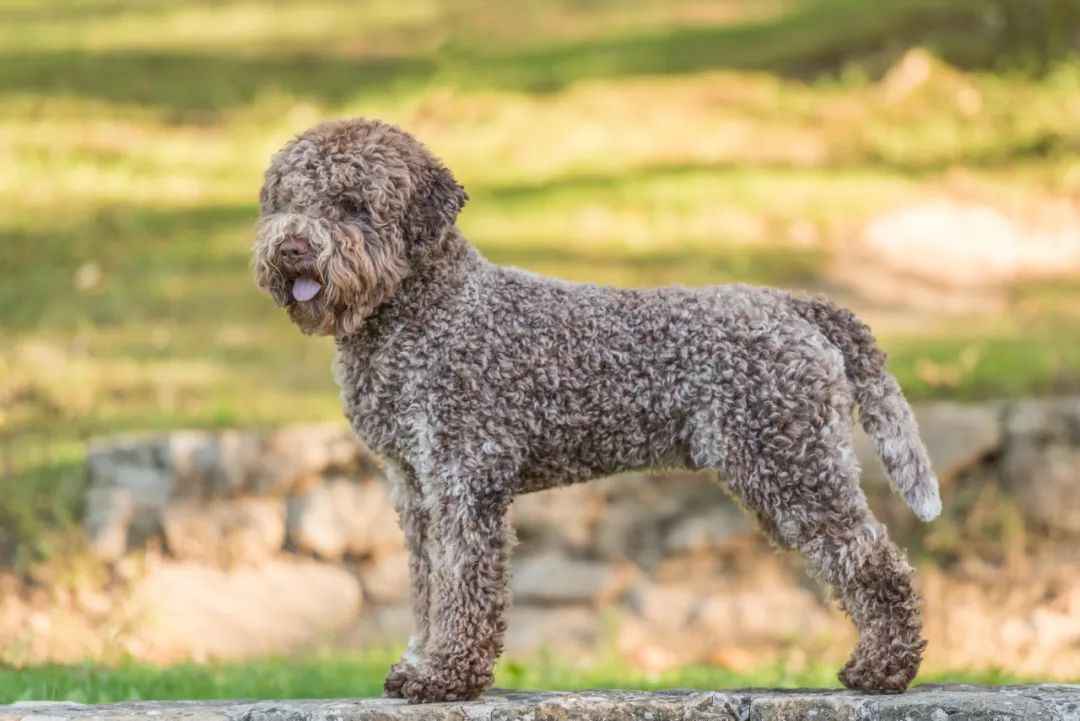
Originating from the Romagna region of northeastern Italy, the Lagotto Romagnolo is a distinctive medium-sized breed celebrated for its curly, waterproof coat and exceptional olfactory prowess. Over five centuries, this breed has undergone a remarkable transformation—evolving from a traditional waterfowl retriever to a globally renowned truffle hunter and cherished family pet12.

Historical Legacy: Adaptation from Wetlands to Truffle Fields

As one of Europe’s oldest dog breeds, the Lagotto Romagnolo traces its roots to the 15th century. Named after the Italian word “laghetto” (small lake), it was originally bred to retrieve waterfowl in the marshlands of the Po River Delta14. By the late 19th century, the breed faced extinction due to wetland drainage until Italian farmers recognized its scenting abilities. Retrained to locate underground truffles, the Lagotto became the world’s only certified truffle-hunting dog, saving itself from obsolescence while securing a vital role in truffle cultivation1016.

Physical Attributes: A Blend of Functionality and Elegance

The Lagotto is compact (41-48 cm in height, 11-16 kg in weight) with a muscular build and enduring stamina1. Its signature woolly coat consists of two layers: a dense, insulating undercoat and a coarse, water-resistant outer layer. Coat colors range from rich browns and oranges to white, often with speckled patterns117. The broad head features a squared muzzle, dark almond-shaped eyes radiating intelligence, and webbed paws ideal for navigating muddy terrains13. This adaptive design ensures success in both aquatic and truffle-hunting environments.

Temperament: A Dual Nature of Dedication and Affection

Renowned for high intelligence and obedience, the Lagotto excels in complex tasks. As truffle hunters, they display relentless focus and endurance; as family pets, they are gentle, sensitive companions, particularly adept at bonding with children1720. Swedish behavioral studies (BPH) highlight their sociability and playfulness, with heritability scores of 0.16-0.26, indicating genetic potential for enhanced companionship traits8.

Health and Breeding: Safeguarding a Genetic Legacy

While generally robust (lifespan: 15-17 years), the breed faces risks like hereditary epilepsy and hip dysplasia921. Puppy epilepsy, often resolving by 13 weeks, mirrors human benign familial neonatal epilepsy21. Reputable breeders conduct over 200 genetic health tests and DNA screenings to eliminate disease-causing alleles1016. Recent successes in international dog shows, such as Penelope Rose’s 2022 Italian National Championship placement, underscore the breed’s balance of form and function15.

Global Impact: From Italian Countryside to International Stardom

Today, the Lagotto Romagnolo has transcended its Italian origins. In the U.S., its AKC popularity surged from 114th in 2015 to 99th in 2024, making it one of the fastest-growing breeds920. Beyond truffle hunting, Lagotti serve in search-and-rescue and therapy roles, leveraging their scenting skills for critical human assistance17. Breeders in Spain, Oregon, and other regions preserve its legacy through ethical practices, ensuring this ancient breed thrives in modern societ

Latest Stories
Feline News2 minute readThe Korat cat, originating from Thailand’s Nakhon Ratchasima province (formerly Korat), is a breed deeply rooted in history and cultural significance. Revered for centuries as a symbol of good luck and prosperity, these silver-blue felines have enchanted the world with their striking appearance and affectionate nature.
Feline News2 minute readThe Burmese cat, a breed steeped in history and adored for its regal charm, continues to captivate cat lovers worldwide. Originating from Myanmar (formerly Burma), these medium-sized shorthairs are celebrated for their luxurious coat, affectionate demeanor, and intelligence. Here’s an in-depth look at this ancient breed, combining the latest research and international standards
Feline News2 minute readThe Russian Blue, with its silvery-blue coat and piercing emerald eyes, stands as a paragon of feline elegance, earning the title "Noble of the Shorthairs" 5. Originating from Arkhangelsk Port in Russia—once known as the "Blue Angel Harbor"—this ancient breed derived its name not from color but from its birthplace 3. In 1860, sailors introduced them to Europe, and they debuted at London's Crystal Palace Exposition in 1875 as "Archangel Cats," captivating audiences with their otherworldly allure
Astro Information1 minute readEnceladus, Saturn’s icy moon, harbors a subsurface ocean beneath tiger-stripe fractures that erupt icy particles into space. These geysers form a dense ice cloud over the south pole, feeding Saturn’s faint E ring. The Cassini spacecraft (2004–2017) provided definitive evidence, capturing this true-color, high-resolution image during a close flyby, revealing shadowed ice chasms and active vents.
Animal Information1 minute readNative to Africa, warthogs (Phacochoerus) earn their name from the fleshy facial warts beneath their eyes. Split into the common warthog and desert warthog, these ungulates have heads comprising one-third of their body length, with tusks reaching 64 cm. They subsist on grass roots and tubers, surviving months without water—adaptations that define their harsh savanna lifestyle.
Astro Information2 minute readA close-up from NASA’s Mars Reconnaissance Orbiter (MRO) HiRISE camera unveils the weathered craters and aeolian features of southern Acidalia Planitia. While standard HiRISE imagery often appears in striking blue tones—a result of multispectral processing to enhance geological details—the region would likely appear gray or pale red to human eyes. Of course, no human has yet witnessed this Martian landscape firsthand—unless we count Andy Weir’s fictional NASA astronaut in The Martian.
Feline News1 minute readDubbed the "parlor panther," the Bombay Cat captivates with its jet-black coat and mesmerizing copper-gold eyes, an uncanny resemblance to the wild black leopard. Originating in 1958, Kentucky breeder Nikki Horner meticulously crossed sable Burmese cats with black American Shorthairs, aiming to create a domestic feline embodying both exotic allure and gentle temperament. After years of selective breeding, her vision became reality, establishing the Bombay as a breed that bridges wild aesthetics with affectionate companionship.