JWST Discovers Tiny Brown Dwarf Just 3-4x Jupiter’s Mass: A Cosmic 'Failed Star' in the Making


Astro Information
JWST Discovers Tiny Brown Dwarf Just 3-4x Jupiter’s Mass: A Cosmic 'Failed Star' in the Making

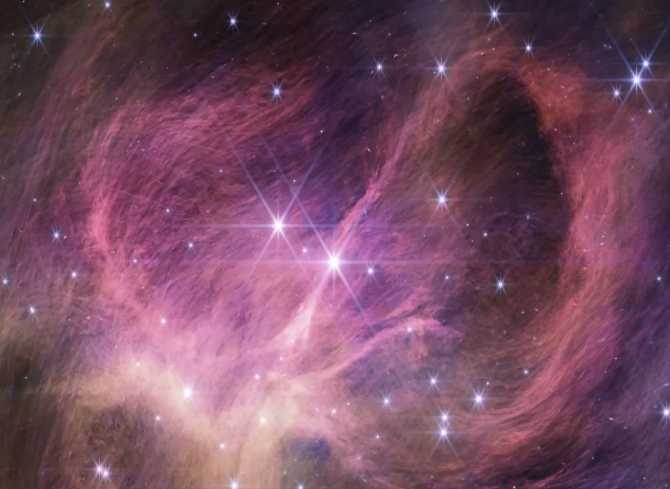
The James Webb Space Telescope (JWST), humanity’s most powerful observatory, has uncovered the smallest brown dwarf ever detected—a celestial "failed star" with a mass just 3 to 4 times that of Jupiter. This diminutive object, located in the IC 348 star cluster within the Perseus constellation (~1,000 light-years from Earth), challenges long-held theories about the minimum mass required for star formation. The discovery, led by astronomers Kevin Luhman (Pennsylvania State University) and Catarina Alves de Oliveira (ESA), reveals a cosmic frontier where stars and planets blur into ambiguity.


A Cosmic Nursery Yields Surprising Secrets

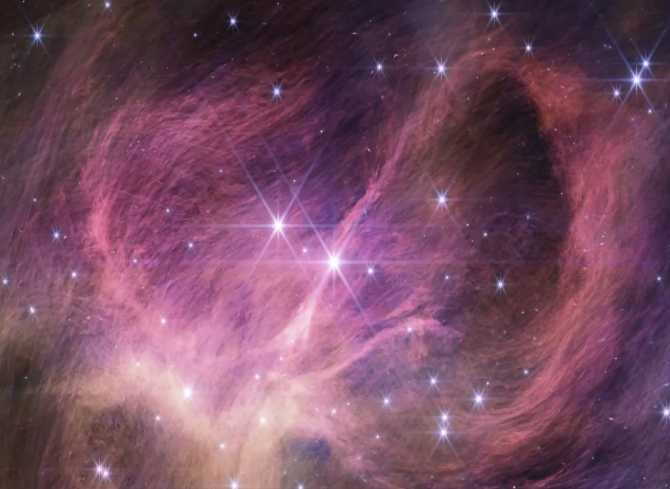
The IC 348 star cluster, a youthful stellar nursery only ~5 million years old, provided the perfect backdrop for this breakthrough. Young star-forming regions like IC 348 host embryonic stars still accumulating mass, making them ideal for spotting low-mass objects like brown dwarfs. Using JWST’s NIRCam (Near-Infrared Camera), the team imaged the cluster’s core, leveraging the instrument’s sensitivity to infrared light—a crucial advantage for detecting faint, cool objects like brown dwarfs.
Source: Images from the Internet, if there is any infringement, please contact the removal of


The search focused on three candidate targets identified through their brightness and color signatures. By analyzing their spectral properties, the team determined their masses (3–8 Jupiter masses) and surface temperatures (830–1,500°C). The smallest object, with a mass of just 3–4 Jupiters, pushes the boundaries of what astronomers thought possible for brown dwarfs. These findings suggest that star formation can produce objects far smaller than the previously accepted theoretical limit of ~13 Jupiter masses 13.

Rewriting the Rulebook on Stellar Formation

Brown dwarfs, often called "failed stars," lack the mass to sustain hydrogen fusion but can briefly fuse deuterium. The IC 348 discovery challenges the traditional understanding of their formation. Computer models indicate that such low-mass objects might form through gravitational collapse in molecular clouds, similar to stars, but with truncated mass accretion 8. Alternatively, they could be ejected from protostellar disks during chaotic interactions in dense star clusters 6.


The implications extend beyond IC 348. Other teams using JWST have reported similar findings: a 5-Jupiter-mass brown dwarf in NGC 1333 and a 3-Jupiter-mass object in the Orion Flame Nebula 1. These discoveries collectively suggest that brown dwarfs may be more common and diverse than previously believed. However, some astronomers remain cautious, noting that objects below 13 Jupiter masses could theoretically be free-floating planets—a distinction that requires further spectroscopic analysis to resolve 36.

The Webb Revolution in Exoplanet and Substellar Science

JWST’s NIRCam and micro-shutter array technology were pivotal in this discovery, enabling precise tracking of faint targets while blocking out glare from brighter stars. The telescope’s infrared capabilities also revealed details about the brown dwarfs’ atmospheres, such as the presence of methane and water vapor—a rarity in such low-mass objects 7.


Looking ahead, astronomers plan to study these brown dwarfs’ evolution and search for planetary companions. The team has already applied for additional JWST observing time to explore whether these "miniature stars" host their own orbiting worlds. As Webb peers deeper into star-forming regions, it continues to redefine our understanding of cosmic boundaries—proving that even the smallest celestial objects can hold monumental clues to the universe’s mysteries.
Latest Stories
Feline News2 minute readThe Korat cat, originating from Thailand’s Nakhon Ratchasima province (formerly Korat), is a breed deeply rooted in history and cultural significance. Revered for centuries as a symbol of good luck and prosperity, these silver-blue felines have enchanted the world with their striking appearance and affectionate nature.
Feline News2 minute readThe Burmese cat, a breed steeped in history and adored for its regal charm, continues to captivate cat lovers worldwide. Originating from Myanmar (formerly Burma), these medium-sized shorthairs are celebrated for their luxurious coat, affectionate demeanor, and intelligence. Here’s an in-depth look at this ancient breed, combining the latest research and international standards
Feline News2 minute readThe Russian Blue, with its silvery-blue coat and piercing emerald eyes, stands as a paragon of feline elegance, earning the title "Noble of the Shorthairs" 5. Originating from Arkhangelsk Port in Russia—once known as the "Blue Angel Harbor"—this ancient breed derived its name not from color but from its birthplace 3. In 1860, sailors introduced them to Europe, and they debuted at London's Crystal Palace Exposition in 1875 as "Archangel Cats," captivating audiences with their otherworldly allure
Astro Information1 minute readEnceladus, Saturn’s icy moon, harbors a subsurface ocean beneath tiger-stripe fractures that erupt icy particles into space. These geysers form a dense ice cloud over the south pole, feeding Saturn’s faint E ring. The Cassini spacecraft (2004–2017) provided definitive evidence, capturing this true-color, high-resolution image during a close flyby, revealing shadowed ice chasms and active vents.
Animal Information1 minute readNative to Africa, warthogs (Phacochoerus) earn their name from the fleshy facial warts beneath their eyes. Split into the common warthog and desert warthog, these ungulates have heads comprising one-third of their body length, with tusks reaching 64 cm. They subsist on grass roots and tubers, surviving months without water—adaptations that define their harsh savanna lifestyle.
Astro Information2 minute readA close-up from NASA’s Mars Reconnaissance Orbiter (MRO) HiRISE camera unveils the weathered craters and aeolian features of southern Acidalia Planitia. While standard HiRISE imagery often appears in striking blue tones—a result of multispectral processing to enhance geological details—the region would likely appear gray or pale red to human eyes. Of course, no human has yet witnessed this Martian landscape firsthand—unless we count Andy Weir’s fictional NASA astronaut in The Martian.
Feline News1 minute readDubbed the "parlor panther," the Bombay Cat captivates with its jet-black coat and mesmerizing copper-gold eyes, an uncanny resemblance to the wild black leopard. Originating in 1958, Kentucky breeder Nikki Horner meticulously crossed sable Burmese cats with black American Shorthairs, aiming to create a domestic feline embodying both exotic allure and gentle temperament. After years of selective breeding, her vision became reality, establishing the Bombay as a breed that bridges wild aesthetics with affectionate companionship.