Tiger Beetles (Cicindelidae): Nature's Speed Demons and Fierce Predators


Insect Information
Tiger Beetles (Cicindelidae): Nature's Speed Demons and Fierce Predators

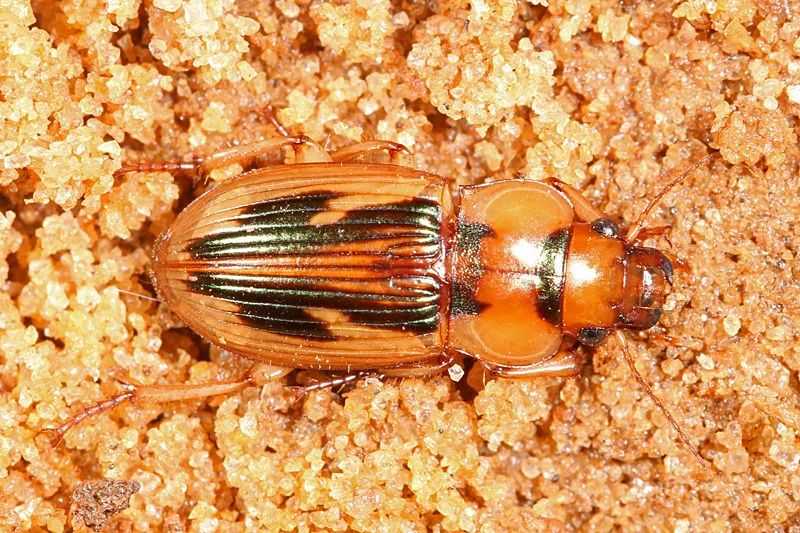
Tiger beetles, members of the family Cicindelidae, are renowned for their dazzling iridescence, aggressive predatory behavior, and unmatched speed—making them some of the most captivating insects in the animal kingdom. These beetles combine stunning aesthetics with remarkable adaptations, thriving in diverse habitats from sandy beaches to forest floors.


Morphology: Jewels of the Insect World

  • Vibrant Coloration: Most tiger beetles sport metallic green, blue, or purple exoskeletons, often with intricate patterns. This coloration arises from structural pigments that refract light, giving them a jewel-like sheen.
  • Elongated Body: Their streamlined bodies and long, spiny legs are optimized for rapid movement.
  • Massive Mandibles: Adults possess large, curved jaws lined with sharp teeth, ideal for seizing and devouring prey like ants, spiders, and other insects.
  • Compound Eyes: Prominent, bulbous eyes provide excellent vision, aiding in tracking fast-moving prey.

Athletic Prowess: The Fastest Land Insects

Tiger beetles are legendary for their speed, capable of running up to 5.6 mph (9 km/h)—relative to body length, this is equivalent to a human sprinting at 480 mph (772 km/h). To put this in perspective:


  • Their rapid pace creates a visual blur, and they often pause mid-chase to reorient, as their eyes can’t process images fast enough to keep up with their movement.
  • This agility helps them ambush prey and evade predators like birds and lizards.

Life Cycle: From Burrower to Hunter

  1. Egg & Larval Stage: Females lay eggs in the soil, and larvae hatch to construct vertical burrows (up to 12 inches deep). Larvae have a flattened "hump" on their backs with hooks, which they use to anchor themselves in the burrow.
  2. Ambush Predators: Larvae wait at burrow entrances, grabbing passing insects with their strong mandibles. They pupate in the burrow before emerging as adults.
  3. Adult Behavior: Adults are diurnal, active hunters that patrol open spaces, using their speed and vision to chase down prey.

Ecological Roles & Adaptations

  • Top Predators: Tiger beetles help control insect populations, playing a key role in ecosystem balance.
  • Habitat Specialization: Some species thrive in specific environments:
    • Beach tiger beetles (e.g., Cicindela dorsalis) inhabit sandy shores, their pale coloration providing camouflage.
    • Forest species may have darker hues to blend with leaf litter.
  • Thermoregulation: In hot environments, they stand on their tiptoes ("stilting") to reduce contact with scorching surfaces, or orient themselves perpendicularly to the sun to minimize heat absorption.

Conservation Concerns

Many tiger beetle species face threats from habitat loss, sand dune development, and pollution. For example:


  • The American tiger beetle (Cicindela americana) is endangered due to coastal erosion and human activity.
  • Conservation efforts focus on protecting their nesting sites and maintaining natural habitats.

Fascinating Trivia

  • Ancient Egyptians revered tiger beetles, associating their iridescence with the sun god Ra.
  • Their scientific name, Cicindela, means "little glowworm" in Latin, referencing their shimmering appearance.
  • Some cultures view them as symbols of perseverance and speed, admired for their ability to thrive in harsh conditions.


From their dazzling armor to their record-breaking sprints, tiger beetles embody nature’s perfect blend of beauty and brutality, standing as a testament to the incredible adaptations that define the insect world.
Latest Stories
Feline News2 minute readThe Korat cat, originating from Thailand’s Nakhon Ratchasima province (formerly Korat), is a breed deeply rooted in history and cultural significance. Revered for centuries as a symbol of good luck and prosperity, these silver-blue felines have enchanted the world with their striking appearance and affectionate nature.
Feline News2 minute readThe Burmese cat, a breed steeped in history and adored for its regal charm, continues to captivate cat lovers worldwide. Originating from Myanmar (formerly Burma), these medium-sized shorthairs are celebrated for their luxurious coat, affectionate demeanor, and intelligence. Here’s an in-depth look at this ancient breed, combining the latest research and international standards
Feline News2 minute readThe Russian Blue, with its silvery-blue coat and piercing emerald eyes, stands as a paragon of feline elegance, earning the title "Noble of the Shorthairs" 5. Originating from Arkhangelsk Port in Russia—once known as the "Blue Angel Harbor"—this ancient breed derived its name not from color but from its birthplace 3. In 1860, sailors introduced them to Europe, and they debuted at London's Crystal Palace Exposition in 1875 as "Archangel Cats," captivating audiences with their otherworldly allure
Astro Information1 minute readEnceladus, Saturn’s icy moon, harbors a subsurface ocean beneath tiger-stripe fractures that erupt icy particles into space. These geysers form a dense ice cloud over the south pole, feeding Saturn’s faint E ring. The Cassini spacecraft (2004–2017) provided definitive evidence, capturing this true-color, high-resolution image during a close flyby, revealing shadowed ice chasms and active vents.
Animal Information1 minute readNative to Africa, warthogs (Phacochoerus) earn their name from the fleshy facial warts beneath their eyes. Split into the common warthog and desert warthog, these ungulates have heads comprising one-third of their body length, with tusks reaching 64 cm. They subsist on grass roots and tubers, surviving months without water—adaptations that define their harsh savanna lifestyle.
Astro Information2 minute readA close-up from NASA’s Mars Reconnaissance Orbiter (MRO) HiRISE camera unveils the weathered craters and aeolian features of southern Acidalia Planitia. While standard HiRISE imagery often appears in striking blue tones—a result of multispectral processing to enhance geological details—the region would likely appear gray or pale red to human eyes. Of course, no human has yet witnessed this Martian landscape firsthand—unless we count Andy Weir’s fictional NASA astronaut in The Martian.
Feline News1 minute readDubbed the "parlor panther," the Bombay Cat captivates with its jet-black coat and mesmerizing copper-gold eyes, an uncanny resemblance to the wild black leopard. Originating in 1958, Kentucky breeder Nikki Horner meticulously crossed sable Burmese cats with black American Shorthairs, aiming to create a domestic feline embodying both exotic allure and gentle temperament. After years of selective breeding, her vision became reality, establishing the Bombay as a breed that bridges wild aesthetics with affectionate companionship.