The World’s Tiniest Deer: Pudu, a Pocket-Sized Marvel of the Andes


Animal Information
The World’s Tiniest Deer: Pudu, a Pocket-Sized Marvel of the Andes

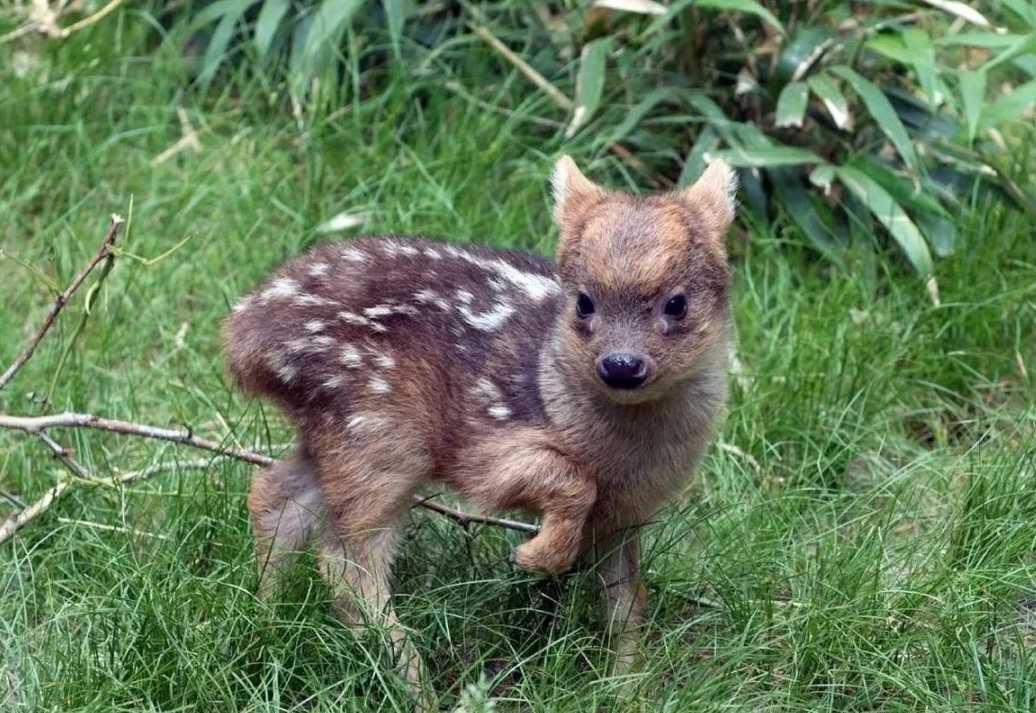
Holding the title of Earth’s smallest deer, the pudu (Pudu pudu and Pudu mephistophiles) enchants biologists with its miniature stature—standing just 30 to 40 centimeters tall as an adult. Native to the Andean forests of Chile and Argentina, this deer species defies expectations with its rabbit-like size, short tail, and endearing appearance, thriving in dense undergrowth where larger ungulates cannot venture.

A Living Doll: Anatomy and Adaptations for Forest Survival

  • Diminutive Dimensions and Camouflage
    The pudu’s compact body (weighing 8–10 kg) is covered in thick, reddish-brown fur, ideal for blending into Andean shrublands. Its short tail and rounded ears reduce visibility, while specialized hooves with sharp edges allow nimble navigation through rocky terrain and tangled vegetation. Unlike larger deer, it lacks prominent antlers; males instead have small, spiky tusks used in territorial disputes.
  • Nocturnal Habits and Dietary Specialization
    Primarily nocturnal, the pudu feeds on leaves, bark, and berries, using its prehensile upper lip to grasp vegetation. Its digestive system is adapted to process tough plant fibers, while a unique nasal structure helps filter cold mountain air. During the day, it shelters in thickets, relying on stealth rather than speed to evade predators like pumas and foxes.

Vulnerability in a Changing Landscape

  • Threats and Conservation Status
    Both pudu species face significant risks: Pudu pudu is listed as "Vulnerable," while Pudu mephistophiles is "Endangered" due to deforestation, agriculture, and invasive species. Their limited range and low reproductive rate (females give birth to one fawn annually) compound population decline. Climate change also threatens their habitat, as rising temperatures alter Andean vegetation patterns.
  • Efforts to Protect the Tiny Giant
    Conservation initiatives in Chile’s Nahuelbuta National Park and Argentina’s Lanín National Park focus on habitat restoration and anti-poaching patrols. Captive breeding programs in zoos have seen success, with reintroduced individuals aiding wild populations. Local communities play a key role in monitoring pudu sightings, turning ecological stewardship into a cultural priority.

Ecological and Cultural Significance

As keystone species, pudus disperse seeds and shape forest ecosystems through browsing. Their presence indicates a healthy Andean habitat, making them vital indicators for conservationists. In Mapuche culture, the pudu is revered as a symbol of resilience in harsh mountain environments, featured in traditional stories that emphasize coexistence with nature.


In the misty Andean forests, the pudu stands as a living testament to evolutionary adaptation. Its tiny form, perfected over millennia to conquer rugged terrain, reminds humanity that biodiversity’s most precious gems often come in the smallest packages—and that protecting these miniature marvels is crucial to preserving Earth’s ecological tapestry.
Latest Stories
Feline News2 minute readThe Korat cat, originating from Thailand’s Nakhon Ratchasima province (formerly Korat), is a breed deeply rooted in history and cultural significance. Revered for centuries as a symbol of good luck and prosperity, these silver-blue felines have enchanted the world with their striking appearance and affectionate nature.
Feline News2 minute readThe Burmese cat, a breed steeped in history and adored for its regal charm, continues to captivate cat lovers worldwide. Originating from Myanmar (formerly Burma), these medium-sized shorthairs are celebrated for their luxurious coat, affectionate demeanor, and intelligence. Here’s an in-depth look at this ancient breed, combining the latest research and international standards
Feline News2 minute readThe Russian Blue, with its silvery-blue coat and piercing emerald eyes, stands as a paragon of feline elegance, earning the title "Noble of the Shorthairs" 5. Originating from Arkhangelsk Port in Russia—once known as the "Blue Angel Harbor"—this ancient breed derived its name not from color but from its birthplace 3. In 1860, sailors introduced them to Europe, and they debuted at London's Crystal Palace Exposition in 1875 as "Archangel Cats," captivating audiences with their otherworldly allure
Astro Information1 minute readEnceladus, Saturn’s icy moon, harbors a subsurface ocean beneath tiger-stripe fractures that erupt icy particles into space. These geysers form a dense ice cloud over the south pole, feeding Saturn’s faint E ring. The Cassini spacecraft (2004–2017) provided definitive evidence, capturing this true-color, high-resolution image during a close flyby, revealing shadowed ice chasms and active vents.
Animal Information1 minute readNative to Africa, warthogs (Phacochoerus) earn their name from the fleshy facial warts beneath their eyes. Split into the common warthog and desert warthog, these ungulates have heads comprising one-third of their body length, with tusks reaching 64 cm. They subsist on grass roots and tubers, surviving months without water—adaptations that define their harsh savanna lifestyle.
Astro Information2 minute readA close-up from NASA’s Mars Reconnaissance Orbiter (MRO) HiRISE camera unveils the weathered craters and aeolian features of southern Acidalia Planitia. While standard HiRISE imagery often appears in striking blue tones—a result of multispectral processing to enhance geological details—the region would likely appear gray or pale red to human eyes. Of course, no human has yet witnessed this Martian landscape firsthand—unless we count Andy Weir’s fictional NASA astronaut in The Martian.
Feline News1 minute readDubbed the "parlor panther," the Bombay Cat captivates with its jet-black coat and mesmerizing copper-gold eyes, an uncanny resemblance to the wild black leopard. Originating in 1958, Kentucky breeder Nikki Horner meticulously crossed sable Burmese cats with black American Shorthairs, aiming to create a domestic feline embodying both exotic allure and gentle temperament. After years of selective breeding, her vision became reality, establishing the Bombay as a breed that bridges wild aesthetics with affectionate companionship.