The Widespread House Sparrow: A Familiar Avian Companion


Bird Information
The Widespread House Sparrow: A Familiar Avian Companion

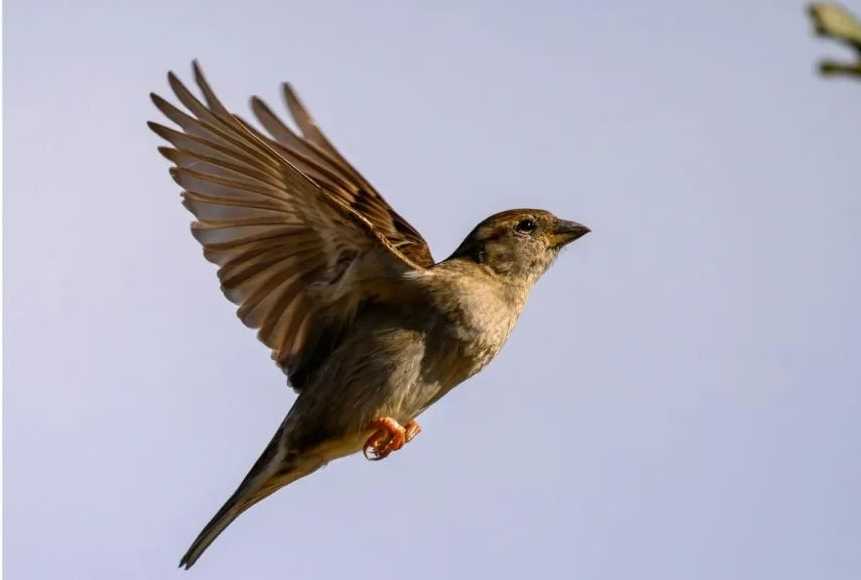
The House Sparrow (Passer domesticus) is a bird species that has become an integral part of human - inhabited landscapes across the globe. This small, adaptable bird has a unique charm and an interesting ecological story to tell.


Measuring around 14 - 16 centimeters in length, House Sparrows exhibit sexual dimorphism. Breeding males are quite striking, sporting a gray crown, white cheeks, a prominent black bib, and a chestnut - colored neck. Their upper parts are richly patterned with chestnut and black, creating a distinct look. In contrast, females are more subdued, with plain buffy - brown plumage overall. Their under parts are dingy gray - brown, and their backs are noticeably striped with buff, black, and brown. This coloration helps them blend into their often - urban and suburban surroundings.


Native to Europe, the Mediterranean basin, and much of Asia, House Sparrows have spread far and wide. They have been introduced, either intentionally or accidentally, to regions like Australasia, Africa, and the Americas. This has made them one of the most widely distributed wild bird species. They thrive in urban and rural settings, closely associating with human habitation. You can spot them in cities, hopping around on sidewalks, scavenging for crumbs in parks, or nesting in the eaves of buildings. In rural areas, they are often found near barns, stables, and storehouses, feasting on waste grain and weed seeds. Despite their adaptability, they typically avoid extensive woodlands, grasslands, polar regions, and remote hot deserts.


These sparrows are highly social, often seen in flocks. They have a pecking order within their groups, with males having a distinct hierarchy. The size of a male's black throat patch, or "bib," is an indicator of its status; larger patches usually belong to older, more dominant males. House Sparrows are omnivores, with a diet mainly consisting of seeds, such as those from grains, flowering plants, and weeds. However, during the breeding season, they also consume insects and their larvae to provide essential protein. They are frequent visitors to bird feeders, readily eating millet, corn, and sunflower seeds. Aggressive by nature, they can sometimes evict native birds from their nest sites, which has led to some resentment among bird enthusiasts. But overall, their presence adds a touch of liveliness to our daily lives, whether it's their constant chirping or their energetic foraging antics.
Latest Stories
Feline News2 minute readThe Korat cat, originating from Thailand’s Nakhon Ratchasima province (formerly Korat), is a breed deeply rooted in history and cultural significance. Revered for centuries as a symbol of good luck and prosperity, these silver-blue felines have enchanted the world with their striking appearance and affectionate nature.
Feline News2 minute readThe Burmese cat, a breed steeped in history and adored for its regal charm, continues to captivate cat lovers worldwide. Originating from Myanmar (formerly Burma), these medium-sized shorthairs are celebrated for their luxurious coat, affectionate demeanor, and intelligence. Here’s an in-depth look at this ancient breed, combining the latest research and international standards
Feline News2 minute readThe Russian Blue, with its silvery-blue coat and piercing emerald eyes, stands as a paragon of feline elegance, earning the title "Noble of the Shorthairs" 5. Originating from Arkhangelsk Port in Russia—once known as the "Blue Angel Harbor"—this ancient breed derived its name not from color but from its birthplace 3. In 1860, sailors introduced them to Europe, and they debuted at London's Crystal Palace Exposition in 1875 as "Archangel Cats," captivating audiences with their otherworldly allure
Astro Information1 minute readEnceladus, Saturn’s icy moon, harbors a subsurface ocean beneath tiger-stripe fractures that erupt icy particles into space. These geysers form a dense ice cloud over the south pole, feeding Saturn’s faint E ring. The Cassini spacecraft (2004–2017) provided definitive evidence, capturing this true-color, high-resolution image during a close flyby, revealing shadowed ice chasms and active vents.
Animal Information1 minute readNative to Africa, warthogs (Phacochoerus) earn their name from the fleshy facial warts beneath their eyes. Split into the common warthog and desert warthog, these ungulates have heads comprising one-third of their body length, with tusks reaching 64 cm. They subsist on grass roots and tubers, surviving months without water—adaptations that define their harsh savanna lifestyle.
Astro Information2 minute readA close-up from NASA’s Mars Reconnaissance Orbiter (MRO) HiRISE camera unveils the weathered craters and aeolian features of southern Acidalia Planitia. While standard HiRISE imagery often appears in striking blue tones—a result of multispectral processing to enhance geological details—the region would likely appear gray or pale red to human eyes. Of course, no human has yet witnessed this Martian landscape firsthand—unless we count Andy Weir’s fictional NASA astronaut in The Martian.
Feline News1 minute readDubbed the "parlor panther," the Bombay Cat captivates with its jet-black coat and mesmerizing copper-gold eyes, an uncanny resemblance to the wild black leopard. Originating in 1958, Kentucky breeder Nikki Horner meticulously crossed sable Burmese cats with black American Shorthairs, aiming to create a domestic feline embodying both exotic allure and gentle temperament. After years of selective breeding, her vision became reality, establishing the Bombay as a breed that bridges wild aesthetics with affectionate companionship.