The Platypus: Australia’s Bizarre 'Duck-Billed' Mammal, a Living Evolutionary Enigma


Animal Information
The Platypus: Australia’s Bizarre 'Duck-Billed' Mammal, a Living Evolutionary Enigma

Native to the freshwater rivers of eastern Australia, the platypus (Ornithorhynchus anatinus) stands as one of the world’s most extraordinary creatures—an odd blend of mammalian, reptilian, and avian traits that baffled scientists when first discovered. Often called a "living fossil," this semiaquatic mammal lays eggs, produces milk, and sports a duck-like bill, making it a unique representative of the ancient monotreme order.


A Hodgepodge of Adaptations: Form and Function

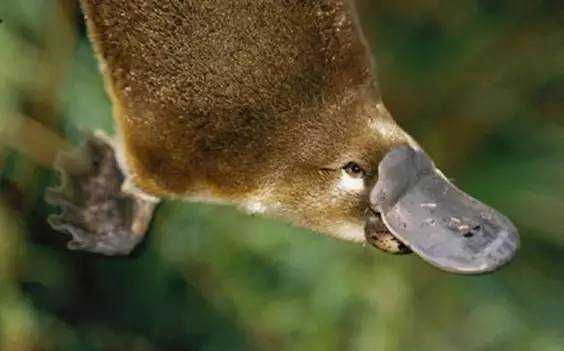
The platypus’s most iconic feature is its rubbery, duck-shaped bill, which is equipped with electroreceptors to detect prey (shrimp, worms, and insects) in murky water. Its body is covered in dense, waterproof fur (ranging from dark brown to light tan), with webbed feet that fold back on land to reveal clawed digits for digging. Males possess venomous spurs on their hind legs, a rare trait among mammals, used in territorial disputes. Growing up to 50 centimeters in length and weighing 1–2 kilograms, it has a flat, beaver-like tail that stores fat and aids in swimming. Despite its mammalian classification, it lacks teats; instead, milk seeps through skin glands, a primitive trait linking it to reptilian ancestors.
 
 
Source: Images from the Internet, if there is any infringement, please contact the removal of


Nocturnal Lifestyle and Conservation Challenges

Primarily nocturnal, the platypus spends its days in burrows along riverbanks and forages at night, using its bill to sweep the riverbed for food. It is a solitary creature, except during the breeding season, when females lay 1–2 leathery eggs and incubate them in their burrows. Once thought common, the platypus is now listed as "Vulnerable" in parts of its range, facing threats from habitat destruction, pollution, droughts, and climate change. River degradation from agriculture and urbanization disrupts its feeding grounds, while dams alter water flow and fragment populations. Conservation groups in Australia, such as the Platypus Conservation Initiative, work to restore river health and raise awareness about this unique mammal’s ecological needs.

A Scientific Marvel and Cultural Icon

The platypus has long fascinated scientists, challenging traditional classifications of mammals. Its genome, a mix of mammalian, reptilian, and avian genes, provides insights into early vertebrate evolution. In Australian Aboriginal culture, it features in Dreamtime stories, symbolizing the duality of water and land. Today, it serves as an unofficial mascot for Australia’s biodiversity, appearing on coins and tourism campaigns. Yet its survival remains precarious—reminding humanity that even the most evolutionarily resilient species depend on intact ecosystems.


As a living link to Earth’s distant past, the platypus embodies nature’s capacity to defy expectation. Its strange form, a product of millions of years of adaptation, stands as a testament to the wonder and fragility of life—urging global efforts to protect the waterways it calls home before this evolutionary enigma becomes a relic of the past.
Latest Stories
Feline News2 minute readThe Korat cat, originating from Thailand’s Nakhon Ratchasima province (formerly Korat), is a breed deeply rooted in history and cultural significance. Revered for centuries as a symbol of good luck and prosperity, these silver-blue felines have enchanted the world with their striking appearance and affectionate nature.
Feline News2 minute readThe Burmese cat, a breed steeped in history and adored for its regal charm, continues to captivate cat lovers worldwide. Originating from Myanmar (formerly Burma), these medium-sized shorthairs are celebrated for their luxurious coat, affectionate demeanor, and intelligence. Here’s an in-depth look at this ancient breed, combining the latest research and international standards
Feline News2 minute readThe Russian Blue, with its silvery-blue coat and piercing emerald eyes, stands as a paragon of feline elegance, earning the title "Noble of the Shorthairs" 5. Originating from Arkhangelsk Port in Russia—once known as the "Blue Angel Harbor"—this ancient breed derived its name not from color but from its birthplace 3. In 1860, sailors introduced them to Europe, and they debuted at London's Crystal Palace Exposition in 1875 as "Archangel Cats," captivating audiences with their otherworldly allure
Astro Information1 minute readEnceladus, Saturn’s icy moon, harbors a subsurface ocean beneath tiger-stripe fractures that erupt icy particles into space. These geysers form a dense ice cloud over the south pole, feeding Saturn’s faint E ring. The Cassini spacecraft (2004–2017) provided definitive evidence, capturing this true-color, high-resolution image during a close flyby, revealing shadowed ice chasms and active vents.
Animal Information1 minute readNative to Africa, warthogs (Phacochoerus) earn their name from the fleshy facial warts beneath their eyes. Split into the common warthog and desert warthog, these ungulates have heads comprising one-third of their body length, with tusks reaching 64 cm. They subsist on grass roots and tubers, surviving months without water—adaptations that define their harsh savanna lifestyle.
Astro Information2 minute readA close-up from NASA’s Mars Reconnaissance Orbiter (MRO) HiRISE camera unveils the weathered craters and aeolian features of southern Acidalia Planitia. While standard HiRISE imagery often appears in striking blue tones—a result of multispectral processing to enhance geological details—the region would likely appear gray or pale red to human eyes. Of course, no human has yet witnessed this Martian landscape firsthand—unless we count Andy Weir’s fictional NASA astronaut in The Martian.
Feline News1 minute readDubbed the "parlor panther," the Bombay Cat captivates with its jet-black coat and mesmerizing copper-gold eyes, an uncanny resemblance to the wild black leopard. Originating in 1958, Kentucky breeder Nikki Horner meticulously crossed sable Burmese cats with black American Shorthairs, aiming to create a domestic feline embodying both exotic allure and gentle temperament. After years of selective breeding, her vision became reality, establishing the Bombay as a breed that bridges wild aesthetics with affectionate companionship.