The Mwanza Flat-headed Iguana: Nature’s Real-Life 'Spiderman' with Iconic Red-Blue Coloration


Insect Information
The Mwanza Flat-headed Iguana: Nature’s Real-Life 'Spiderman' with Iconic Red-Blue Coloration

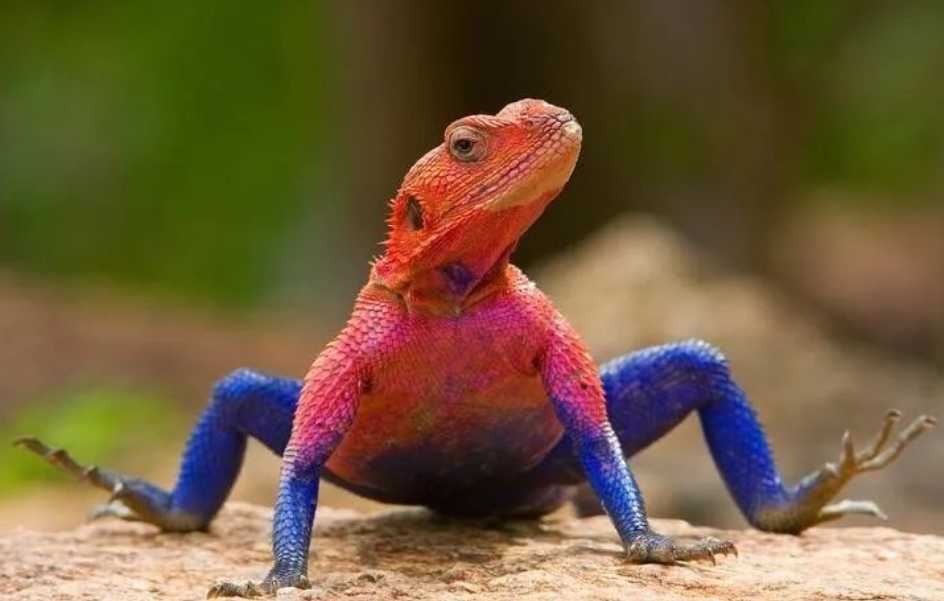
Resembling a creature straight from a comic book, the Mwanza flat-headed iguana (Agama mwanzae) has earned global attention for its striking red and blue coloration—an uncanny resemblance to Spider-Man. Native to eastern Africa (not South America, despite common misconceptions), this lizard thrives in rocky habitats from Tanzania to Kenya, using its vibrant hues for both survival and social signaling.


A Reptilian Superhero: Anatomy and Adaptations

  • Dramatic Coloration and Sexual Dimorphism
    Male iguanas boast a deep blue head and throat, contrasting with a fiery red body and tail. Females and juveniles are duller, with muted browns and grays—highlighting the species’ extreme sexual dimorphism. The vivid colors stem from structural pigments in the skin, which reflect light to create iridescence. During mating season, males intensify their hues to attract females and intimidate rivals.
  • Flat Head and Rock-Climbing Specializations
    As its name suggests, the lizard has a flattened skull adapted for squeezing into rock crevices. Strong, clawed feet allow it to scale vertical cliffs and boulders, while a long tail provides balance. Growing up to 30 cm, it basks in the sun to regulate body temperature, often perching on prominent rocks to display its vibrant plumage.

Ecology and Behavior in African Habitats

  • Omnivorous Diet and Social Structure
    The Mwanza iguana feeds on insects, fruits, and vegetation, using its sharp teeth to crush prey and plant matter. It lives in small groups dominated by a dominant male, who defends a territory by performing push-up displays and head bobs. When threatened, it retreats into rock holes or runs in a bipedal stance, showcasing agility that mirrors its arachnid namesake’s acrobatics.
  • Reproduction and Habitat Requirements
    Females lay clutches of 5–10 eggs in sandy soil, burying them to protect from predators. The species prefers arid to semi-arid environments with ample rock outcrops, making it well adapted to Tanzania’s Mwanza region—where it was first discovered. Its range overlaps with human settlements, allowing occasional close observations.

Cultural Fame and Conservation Realities

Thanks to viral photos, the "Spider-Man iguana" has become an internet sensation, but its popularity has raised concerns about illegal pet trade. While not currently endangered, it faces threats from habitat degradation and collection for the exotic pet market. Local conservation groups advocate for habitat preservation and education to curb wild-caught trade, emphasizing its role in controlling insect populations and maintaining ecosystem balance.


In the rocky landscapes of eastern Africa, the Mwanza flat-headed iguana proves that nature’s palette is as bold as any fictional creation. Its red-blue armor, evolved for survival rather than crime-fighting, serves as a reminder that Earth’s biodiversity holds wonders as captivating as the imagination—if we choose to protect them.
Latest Stories
Feline News2 minute readThe Korat cat, originating from Thailand’s Nakhon Ratchasima province (formerly Korat), is a breed deeply rooted in history and cultural significance. Revered for centuries as a symbol of good luck and prosperity, these silver-blue felines have enchanted the world with their striking appearance and affectionate nature.
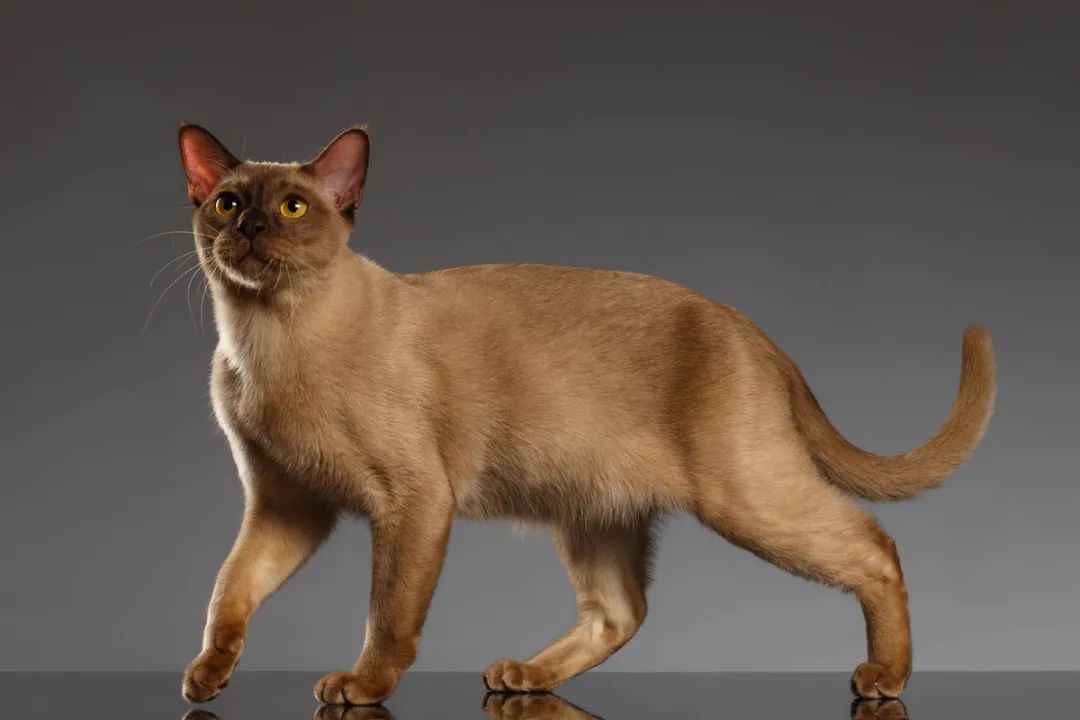
Feline News2 minute readThe Burmese cat, a breed steeped in history and adored for its regal charm, continues to captivate cat lovers worldwide. Originating from Myanmar (formerly Burma), these medium-sized shorthairs are celebrated for their luxurious coat, affectionate demeanor, and intelligence. Here’s an in-depth look at this ancient breed, combining the latest research and international standards
Feline News2 minute readThe Russian Blue, with its silvery-blue coat and piercing emerald eyes, stands as a paragon of feline elegance, earning the title "Noble of the Shorthairs" 5. Originating from Arkhangelsk Port in Russia—once known as the "Blue Angel Harbor"—this ancient breed derived its name not from color but from its birthplace 3. In 1860, sailors introduced them to Europe, and they debuted at London's Crystal Palace Exposition in 1875 as "Archangel Cats," captivating audiences with their otherworldly allure
Astro Information1 minute readEnceladus, Saturn’s icy moon, harbors a subsurface ocean beneath tiger-stripe fractures that erupt icy particles into space. These geysers form a dense ice cloud over the south pole, feeding Saturn’s faint E ring. The Cassini spacecraft (2004–2017) provided definitive evidence, capturing this true-color, high-resolution image during a close flyby, revealing shadowed ice chasms and active vents.
Animal Information1 minute readNative to Africa, warthogs (Phacochoerus) earn their name from the fleshy facial warts beneath their eyes. Split into the common warthog and desert warthog, these ungulates have heads comprising one-third of their body length, with tusks reaching 64 cm. They subsist on grass roots and tubers, surviving months without water—adaptations that define their harsh savanna lifestyle.
Astro Information2 minute readA close-up from NASA’s Mars Reconnaissance Orbiter (MRO) HiRISE camera unveils the weathered craters and aeolian features of southern Acidalia Planitia. While standard HiRISE imagery often appears in striking blue tones—a result of multispectral processing to enhance geological details—the region would likely appear gray or pale red to human eyes. Of course, no human has yet witnessed this Martian landscape firsthand—unless we count Andy Weir’s fictional NASA astronaut in The Martian.
Feline News1 minute readDubbed the "parlor panther," the Bombay Cat captivates with its jet-black coat and mesmerizing copper-gold eyes, an uncanny resemblance to the wild black leopard. Originating in 1958, Kentucky breeder Nikki Horner meticulously crossed sable Burmese cats with black American Shorthairs, aiming to create a domestic feline embodying both exotic allure and gentle temperament. After years of selective breeding, her vision became reality, establishing the Bombay as a breed that bridges wild aesthetics with affectionate companionship.