The Honduran White Bat: Nature’s Fluffy, Pastel-Colored Flying Puffball


Animal Information
The Honduran White Bat: Nature’s Fluffy, Pastel-Colored Flying Puffball

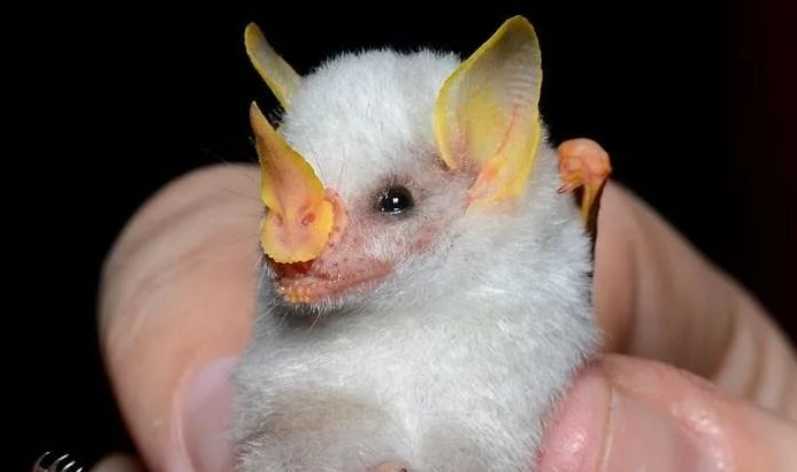
Hailed as the world’s cutest bat, the Honduran white bat (Ectophylla alba) charms with its snowy-white fur, vibrant orange nose, ears, and wings—a whimsical color palette that defies all bat stereotypes. Native to the rainforests of Central America (Honduras, Nicaragua, Costa Rica, and Panama), this tiny chiropteran measures just 3–5 cm long, making it one of the smallest bat species on Earth. Its cottony appearance and miniature size have earned it a reputation as the "teddy bear of the bat world."

A Living Marshmallow: Anatomy and Adaptive Design

  • Plush White Fur and Vibrant Accents
    The bat’s most striking feature is its dense, velvety white fur, which provides camouflage among the pale undersides of heliconia leaves—the very plants it transforms into "tents" for shelter. Contrasting sharply with its snowy coat are bright orange facial features and wing membranes, likely resulting from carotenoid pigments in its diet of ripe fruits. This coloration may serve as a visual signal during social interactions or mating displays.
  • Tiny Size and Specialized Feeding
    Weighing less than a nickel, the Honduran white bat is a frugivore, primarily consuming the pulp of figs and other tropical fruits. Its small, pointed snout and sharp teeth are adapted for piercing fruit skins, while its modified palate allows it to extract nutrients without ingesting seeds—making it an important seed disperser in rainforest ecosystems.

Tent-Making Tactics and Social Life

  • Architects of Leaf Tents
    Unlike most bats that roost in caves or tree hollows, this species creates shelters by biting the veins of large heliconia or banana leaves, causing them to fold into tent-like structures. These leaf tents provide protection from predators and rain, while also regulating temperature and humidity for the colony.
  • Social Structure in Miniature
    Honduran white bats live in small family groups of 2–12 individuals, led by a dominant male. Females give birth to a single pup annually, which clings to its mother’s fur until it can fly. The colony’s tight-knit behavior and shared roosting habits contribute to their endearing reputation, as they huddle together in their leaf tents, appearing as a cluster of fluffy white balls.

Conservation Status and Ecological Role

  • Vulnerability in a Changing Landscape
    Though currently listed as "Least Concern" by the IUCN, the Honduran white bat faces threats from deforestation and habitat fragmentation. Its reliance on specific leaf types for roosting makes it sensitive to changes in rainforest vegetation. Pesticide use in banana plantations also poses a risk, as contaminated fruits can harm the bats directly or disrupt their food chain.
  • Unsung Heroes of the Rainforest
    As frugivores, these bats play a crucial role in dispersing seeds, aiding reforestation and maintaining plant diversity. Their leaf-tent construction also creates microhabitats for other small creatures, such as insects and frogs, highlighting their importance as ecosystem engineers.


In the lush canopies of Central America, the Honduran white bat proves that bats can be adorable—and vital to healthy ecosystems. Its cottony white fur and vibrant orange features remind us that nature’s most charming creations often hide in plain sight, waiting to dispel myths and inspire wonder. As we work to protect its rainforest home, we preserve not just a "cute" bat, but a key player in the intricate web of tropical life.
Latest Stories
Feline News2 minute readThe Korat cat, originating from Thailand’s Nakhon Ratchasima province (formerly Korat), is a breed deeply rooted in history and cultural significance. Revered for centuries as a symbol of good luck and prosperity, these silver-blue felines have enchanted the world with their striking appearance and affectionate nature.
Feline News2 minute readThe Burmese cat, a breed steeped in history and adored for its regal charm, continues to captivate cat lovers worldwide. Originating from Myanmar (formerly Burma), these medium-sized shorthairs are celebrated for their luxurious coat, affectionate demeanor, and intelligence. Here’s an in-depth look at this ancient breed, combining the latest research and international standards
Feline News2 minute readThe Russian Blue, with its silvery-blue coat and piercing emerald eyes, stands as a paragon of feline elegance, earning the title "Noble of the Shorthairs" 5. Originating from Arkhangelsk Port in Russia—once known as the "Blue Angel Harbor"—this ancient breed derived its name not from color but from its birthplace 3. In 1860, sailors introduced them to Europe, and they debuted at London's Crystal Palace Exposition in 1875 as "Archangel Cats," captivating audiences with their otherworldly allure
Astro Information1 minute readEnceladus, Saturn’s icy moon, harbors a subsurface ocean beneath tiger-stripe fractures that erupt icy particles into space. These geysers form a dense ice cloud over the south pole, feeding Saturn’s faint E ring. The Cassini spacecraft (2004–2017) provided definitive evidence, capturing this true-color, high-resolution image during a close flyby, revealing shadowed ice chasms and active vents.
Animal Information1 minute readNative to Africa, warthogs (Phacochoerus) earn their name from the fleshy facial warts beneath their eyes. Split into the common warthog and desert warthog, these ungulates have heads comprising one-third of their body length, with tusks reaching 64 cm. They subsist on grass roots and tubers, surviving months without water—adaptations that define their harsh savanna lifestyle.
Astro Information2 minute readA close-up from NASA’s Mars Reconnaissance Orbiter (MRO) HiRISE camera unveils the weathered craters and aeolian features of southern Acidalia Planitia. While standard HiRISE imagery often appears in striking blue tones—a result of multispectral processing to enhance geological details—the region would likely appear gray or pale red to human eyes. Of course, no human has yet witnessed this Martian landscape firsthand—unless we count Andy Weir’s fictional NASA astronaut in The Martian.
Feline News1 minute readDubbed the "parlor panther," the Bombay Cat captivates with its jet-black coat and mesmerizing copper-gold eyes, an uncanny resemblance to the wild black leopard. Originating in 1958, Kentucky breeder Nikki Horner meticulously crossed sable Burmese cats with black American Shorthairs, aiming to create a domestic feline embodying both exotic allure and gentle temperament. After years of selective breeding, her vision became reality, establishing the Bombay as a breed that bridges wild aesthetics with affectionate companionship.