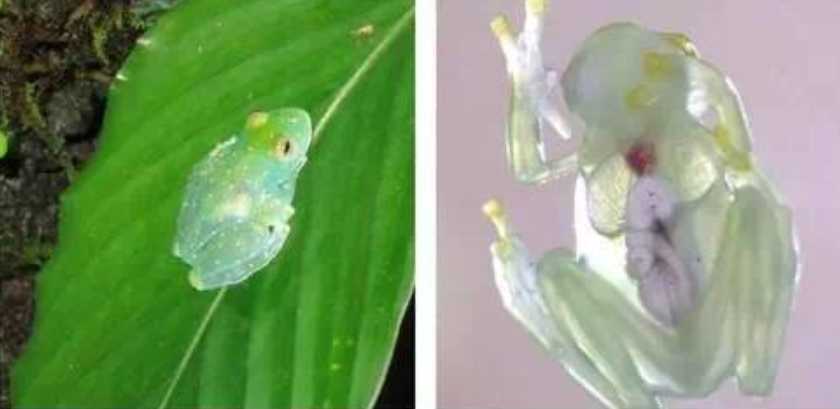
The Glass Frog: Nature’s Transparent Amphibian with a Window to Its Inner World


Animal Information
The Glass Frog: Nature’s Transparent Amphibian with a Window to Its Inner World

Native to the cloud forests of Central and South America, the glass frog (family Centrolenidae) is a remarkable amphibian celebrated for its most unique trait—transparent skin on its belly, allowing observers to see its beating heart, intestines, and even eggs. This evolutionary marvel has captivated biologists, offering a rare glimpse into the inner workings of a living animal.

Transparency as a Survival Strategy

  • Anatomical Wonder
    The frog’s ventral skin is so clear that organs like the liver, stomach, and ovaries are visible through the tissue. Males often have a more translucent abdomen, while females carrying eggs display greenish-yellow ova through their skin. This transparency, achieved by minimizing collagen fibers and pigment cells, helps the frog blend with sunlit leaves, making it nearly invisible to predators.
  • Physical Traits
    Ranging from 2–8 cm in length, glass frogs have lime-green dorsal skin for camouflage among foliage, large adhesive toe pads for tree-climbing, and bulging eyes that peer upward to spot prey or threats. Species like Cochranella mache have even been observed altering skin transparency by redistributing pigment cells.

Life Cycle and Ecological Role

  • Breeding in the Canopy
    Females lay eggs on the undersides of leaves overhanging streams. Males guard the clutch, keeping it moist to prevent dehydration. When tadpoles hatch, they drop into the water below, where they develop into froglets. This strategy avoids terrestrial predators but exposes them to aquatic threats like fish.
  • Insect Control and Ecosystem Health
    As insectivores, glass frogs feed on mosquitoes, ants, and small arthropods, helping control pest populations. Their sensitivity to habitat disturbance makes them excellent indicators of rainforest health; declines in their numbers signal deteriorating water quality or deforestation.

Conservation Challenges and Scientific Interest

  • Threats to Transparency
    Listed as "Vulnerable" or "Endangered" in many regions, glass frogs face risks from deforestation, climate change, and the chytrid fungus epidemic. Their reliance on specific microhabitats (e.g., streams with overhanging vegetation) makes them particularly susceptible to habitat loss.
  • Medical and Biological Insights
    Researchers study their transparent skin to understand tissue clarity and wound healing, while their unique embryonic development (outside water) provides clues to amphibian adaptation. The frog’s ability to hide internal structures without compromising organ function has even inspired materials science for transparent biomedical implants.


In the mist-shrouded forests of the Neotropics, the glass frog stands as a testament to nature’s ingenuity—an organism that turned vulnerability into a survival advantage by revealing its own biology. Its transparent body not only defies predation but also invites humanity to marvel at the delicate beauty hidden within life’s most unassuming forms.
Latest Stories
Feline News2 minute readThe Korat cat, originating from Thailand’s Nakhon Ratchasima province (formerly Korat), is a breed deeply rooted in history and cultural significance. Revered for centuries as a symbol of good luck and prosperity, these silver-blue felines have enchanted the world with their striking appearance and affectionate nature.
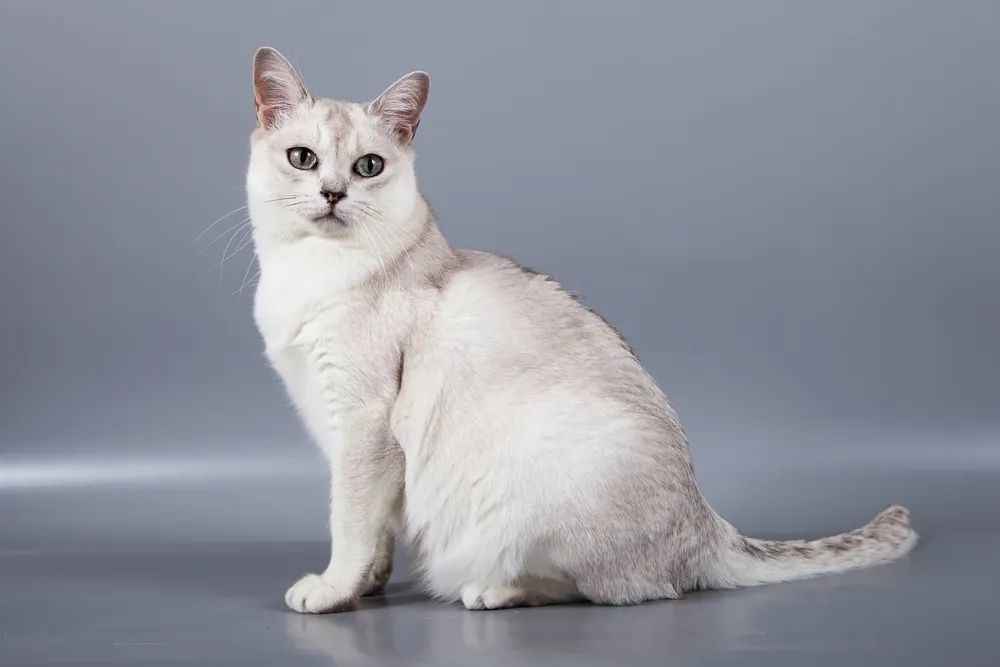
Feline News2 minute readThe Burmese cat, a breed steeped in history and adored for its regal charm, continues to captivate cat lovers worldwide. Originating from Myanmar (formerly Burma), these medium-sized shorthairs are celebrated for their luxurious coat, affectionate demeanor, and intelligence. Here’s an in-depth look at this ancient breed, combining the latest research and international standards
Feline News2 minute readThe Russian Blue, with its silvery-blue coat and piercing emerald eyes, stands as a paragon of feline elegance, earning the title "Noble of the Shorthairs" 5. Originating from Arkhangelsk Port in Russia—once known as the "Blue Angel Harbor"—this ancient breed derived its name not from color but from its birthplace 3. In 1860, sailors introduced them to Europe, and they debuted at London's Crystal Palace Exposition in 1875 as "Archangel Cats," captivating audiences with their otherworldly allure
Astro Information1 minute readEnceladus, Saturn’s icy moon, harbors a subsurface ocean beneath tiger-stripe fractures that erupt icy particles into space. These geysers form a dense ice cloud over the south pole, feeding Saturn’s faint E ring. The Cassini spacecraft (2004–2017) provided definitive evidence, capturing this true-color, high-resolution image during a close flyby, revealing shadowed ice chasms and active vents.
Animal Information1 minute readNative to Africa, warthogs (Phacochoerus) earn their name from the fleshy facial warts beneath their eyes. Split into the common warthog and desert warthog, these ungulates have heads comprising one-third of their body length, with tusks reaching 64 cm. They subsist on grass roots and tubers, surviving months without water—adaptations that define their harsh savanna lifestyle.
Astro Information2 minute readA close-up from NASA’s Mars Reconnaissance Orbiter (MRO) HiRISE camera unveils the weathered craters and aeolian features of southern Acidalia Planitia. While standard HiRISE imagery often appears in striking blue tones—a result of multispectral processing to enhance geological details—the region would likely appear gray or pale red to human eyes. Of course, no human has yet witnessed this Martian landscape firsthand—unless we count Andy Weir’s fictional NASA astronaut in The Martian.
Feline News1 minute readDubbed the "parlor panther," the Bombay Cat captivates with its jet-black coat and mesmerizing copper-gold eyes, an uncanny resemblance to the wild black leopard. Originating in 1958, Kentucky breeder Nikki Horner meticulously crossed sable Burmese cats with black American Shorthairs, aiming to create a domestic feline embodying both exotic allure and gentle temperament. After years of selective breeding, her vision became reality, establishing the Bombay as a breed that bridges wild aesthetics with affectionate companionship.