The Australian Reed Warbler: A Melodious Architect of Wetland Habitats


Bird Information
The Australian Reed Warbler: A Melodious Architect of Wetland Habitats

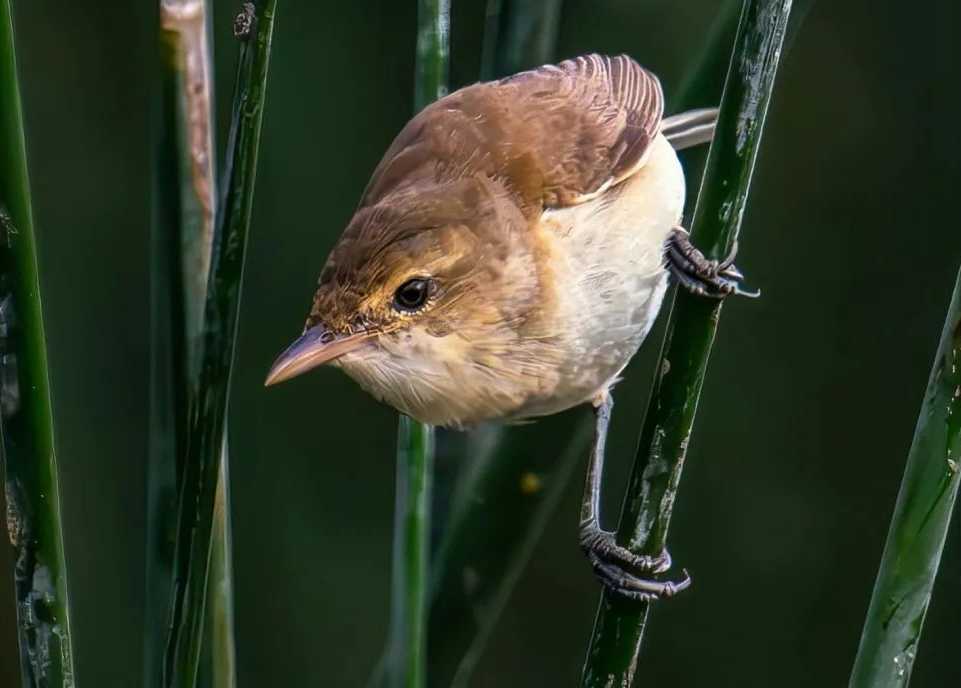
The Australian Reed Warbler (Acrocephalus australis), a small yet dynamic songbird, thrives in the dense reed beds and marshy environments across Australia and Tasmania. Renowned for its intricate songs and remarkable nesting skills, this species is a vital component of wetland ecosystems, blending into its lush green surroundings while contributing to the biodiversity of these fragile habitats.


Measuring around 12–14 centimeters in length, the Australian Reed Warbler has a modest appearance with olive-brown upperparts, a pale buff underbelly, and a faint white stripe above its eye. Its unassuming plumage serves as effective camouflage among the tall reeds and grasses where it spends most of its life. Despite its plain exterior, the bird’s vocal abilities are extraordinary: males produce a loud, varied song consisting of rapid, chattering notes and melodious trills, used to establish territory and attract mates. This persistent singing, often heard throughout the day and even at night, makes the reed warbler a familiar sound in wetland areas, even when the bird itself remains hidden from view.


Feeding primarily on insects, spiders, and small invertebrates, the Australian Reed Warbler is an adept forager, weaving through the reeds with agile movements to pluck prey from the vegetation. During the breeding season, its most remarkable trait emerges: the construction of elaborate, spherical nests woven from reeds and grasses. These nests are suspended from the stems of aquatic plants, providing protection from flooding and predators. Females lay 2–4 eggs, which both parents incubate and feed, showcasing a strong sense of partnership in raising their young.


However, the Australian Reed Warbler faces challenges due to the degradation of wetland habitats. Drainage for agriculture, urban development, and invasive plant species have reduced the availability of suitable reed beds. Conservation efforts focus on restoring and protecting wetlands, recognizing their importance not only for this species but also for water purification and carbon storage. As a bioindicator of wetland health, the presence of reed warblers signals a thriving ecosystem. For birdwatchers and nature lovers, the chance to spot this elusive bird or hear its vibrant song offers a deeper connection to Australia’s unique natural heritage, emphasizing the need to preserve these vital yet under-threat environments.
Latest Stories
Feline News2 minute readThe Korat cat, originating from Thailand’s Nakhon Ratchasima province (formerly Korat), is a breed deeply rooted in history and cultural significance. Revered for centuries as a symbol of good luck and prosperity, these silver-blue felines have enchanted the world with their striking appearance and affectionate nature.
Feline News2 minute readThe Burmese cat, a breed steeped in history and adored for its regal charm, continues to captivate cat lovers worldwide. Originating from Myanmar (formerly Burma), these medium-sized shorthairs are celebrated for their luxurious coat, affectionate demeanor, and intelligence. Here’s an in-depth look at this ancient breed, combining the latest research and international standards
Feline News2 minute readThe Russian Blue, with its silvery-blue coat and piercing emerald eyes, stands as a paragon of feline elegance, earning the title "Noble of the Shorthairs" 5. Originating from Arkhangelsk Port in Russia—once known as the "Blue Angel Harbor"—this ancient breed derived its name not from color but from its birthplace 3. In 1860, sailors introduced them to Europe, and they debuted at London's Crystal Palace Exposition in 1875 as "Archangel Cats," captivating audiences with their otherworldly allure
Astro Information1 minute readEnceladus, Saturn’s icy moon, harbors a subsurface ocean beneath tiger-stripe fractures that erupt icy particles into space. These geysers form a dense ice cloud over the south pole, feeding Saturn’s faint E ring. The Cassini spacecraft (2004–2017) provided definitive evidence, capturing this true-color, high-resolution image during a close flyby, revealing shadowed ice chasms and active vents.
Animal Information1 minute readNative to Africa, warthogs (Phacochoerus) earn their name from the fleshy facial warts beneath their eyes. Split into the common warthog and desert warthog, these ungulates have heads comprising one-third of their body length, with tusks reaching 64 cm. They subsist on grass roots and tubers, surviving months without water—adaptations that define their harsh savanna lifestyle.
Astro Information2 minute readA close-up from NASA’s Mars Reconnaissance Orbiter (MRO) HiRISE camera unveils the weathered craters and aeolian features of southern Acidalia Planitia. While standard HiRISE imagery often appears in striking blue tones—a result of multispectral processing to enhance geological details—the region would likely appear gray or pale red to human eyes. Of course, no human has yet witnessed this Martian landscape firsthand—unless we count Andy Weir’s fictional NASA astronaut in The Martian.
Feline News1 minute readDubbed the "parlor panther," the Bombay Cat captivates with its jet-black coat and mesmerizing copper-gold eyes, an uncanny resemblance to the wild black leopard. Originating in 1958, Kentucky breeder Nikki Horner meticulously crossed sable Burmese cats with black American Shorthairs, aiming to create a domestic feline embodying both exotic allure and gentle temperament. After years of selective breeding, her vision became reality, establishing the Bombay as a breed that bridges wild aesthetics with affectionate companionship.