Majestic Birman Cats: A Timeless Breed with Royal Origins and Modern Appeal


Feline News
Majestic Birman Cats: A Timeless Breed with Royal Origins and Modern Appeal

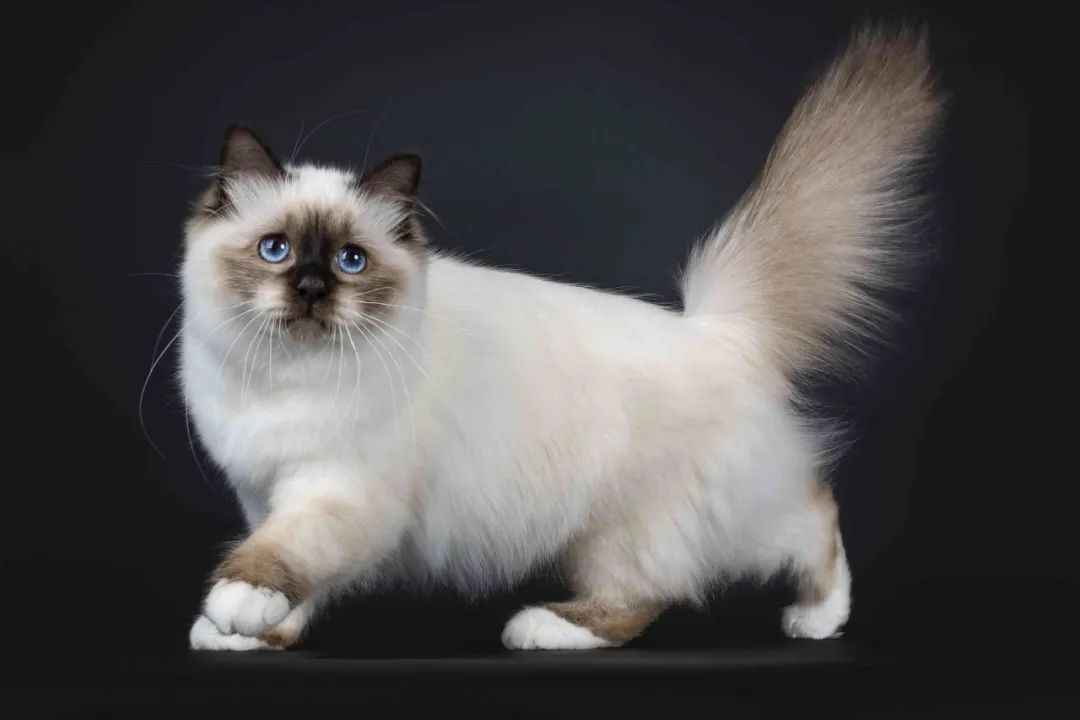
The Birman, often referred to as the "Sacred Cat of Burma," has captivated feline enthusiasts for centuries with its striking appearance and gentle demeanor. Originating from ancient Myanmar, this breed is steeped in legend, with stories of temple cats said to have guarded religious shrines alongside monks 312. While its exact origins remain shrouded in mystery, the modern Birman emerged in France during the early 20th century, where breeders refined its distinctive traits, including its semi-long, silky coat and piercing sapphire-blue eyes

Physical Elegance and Unique Markings

Birmans are medium to large cats with a muscular build and a luxurious coat that comes in four primary color variations: seal, blue, chocolate, and lilac points. Their most iconic feature is their "gloved" paws—pure white extremities that contrast vividly with their darker facial masks, ears, and tails 1213. This striking pattern, combined with their expressive eyes, gives them an air of regality, earning them comparisons to royalty in both appearance and demeanor.

A Gentle and Sociable Temperament

Known for their affectionate nature, Birmans thrive on human companionship and are often described as "dog-like" in their loyalty. They form deep bonds with their owners, seeking out interaction and even following them around the house 414. Unlike more aloof breeds, Birmans are adaptable and enjoy the company of children and other pets, making them ideal family companions 14. Their soft, melodious voices add to their charm, as they communicate with gentle chirps and purrs.

Health Considerations and Care

While generally robust, Birmans are prone to polycystic kidney disease (PKD), a hereditary condition that affects the kidneys. Responsible breeders now screen for PKD to reduce its prevalence, ensuring healthier bloodlines 56. Regular veterinary check-ups and a balanced diet are essential to maintain their well-being. Despite this, Birmans have an average lifespan of 12-16 years, with some living longer in loving homes 30.

Rising Popularity in the Global Pet Market

In recent years, Birmans have gained traction in international markets, driven by their regal appearance and affectionate personalities. Their presence in high-profile events, such as cat shows and social media, has amplified their appeal. Notably, Karl Lagerfeld’s Birman cat, Choupette, became a global icon with her own social media following and luxury lifestyle, highlighting the breed’s cultural cachet 1. Breeders in countries like the UK and the US report steady demand, with kittens often reserved months in advance 1011.

A Breed Rooted in History, Loved in the Present

The Birman’s enduring popularity stems from its unique blend of beauty, grace, and companionship. Whether lounging by the fireplace or playfully interacting with family members, these cats embody the perfect balance of elegance and warmth. As the global pet industry continues to grow—with cat-related spending projected to reach $484 billion by 2025 27—the Birman remains a timeless choice for those seeking a feline companion that is both a living legacy and a cherished friend.
Latest Stories
Feline News2 minute readThe Korat cat, originating from Thailand’s Nakhon Ratchasima province (formerly Korat), is a breed deeply rooted in history and cultural significance. Revered for centuries as a symbol of good luck and prosperity, these silver-blue felines have enchanted the world with their striking appearance and affectionate nature.
Feline News2 minute readThe Burmese cat, a breed steeped in history and adored for its regal charm, continues to captivate cat lovers worldwide. Originating from Myanmar (formerly Burma), these medium-sized shorthairs are celebrated for their luxurious coat, affectionate demeanor, and intelligence. Here’s an in-depth look at this ancient breed, combining the latest research and international standards
Feline News2 minute readThe Russian Blue, with its silvery-blue coat and piercing emerald eyes, stands as a paragon of feline elegance, earning the title "Noble of the Shorthairs" 5. Originating from Arkhangelsk Port in Russia—once known as the "Blue Angel Harbor"—this ancient breed derived its name not from color but from its birthplace 3. In 1860, sailors introduced them to Europe, and they debuted at London's Crystal Palace Exposition in 1875 as "Archangel Cats," captivating audiences with their otherworldly allure
Astro Information1 minute readEnceladus, Saturn’s icy moon, harbors a subsurface ocean beneath tiger-stripe fractures that erupt icy particles into space. These geysers form a dense ice cloud over the south pole, feeding Saturn’s faint E ring. The Cassini spacecraft (2004–2017) provided definitive evidence, capturing this true-color, high-resolution image during a close flyby, revealing shadowed ice chasms and active vents.
Animal Information1 minute readNative to Africa, warthogs (Phacochoerus) earn their name from the fleshy facial warts beneath their eyes. Split into the common warthog and desert warthog, these ungulates have heads comprising one-third of their body length, with tusks reaching 64 cm. They subsist on grass roots and tubers, surviving months without water—adaptations that define their harsh savanna lifestyle.
Astro Information2 minute readA close-up from NASA’s Mars Reconnaissance Orbiter (MRO) HiRISE camera unveils the weathered craters and aeolian features of southern Acidalia Planitia. While standard HiRISE imagery often appears in striking blue tones—a result of multispectral processing to enhance geological details—the region would likely appear gray or pale red to human eyes. Of course, no human has yet witnessed this Martian landscape firsthand—unless we count Andy Weir’s fictional NASA astronaut in The Martian.
Feline News1 minute readDubbed the "parlor panther," the Bombay Cat captivates with its jet-black coat and mesmerizing copper-gold eyes, an uncanny resemblance to the wild black leopard. Originating in 1958, Kentucky breeder Nikki Horner meticulously crossed sable Burmese cats with black American Shorthairs, aiming to create a domestic feline embodying both exotic allure and gentle temperament. After years of selective breeding, her vision became reality, establishing the Bombay as a breed that bridges wild aesthetics with affectionate companionship.