The Japanese Bobtail Longhair, a breed steeped in centuries of history and cultural symbolism, has captivated cat enthusiasts worldwide with its distinctive appearance and endearing personality. Combining the iconic short, pom-pom tail of the Japanese Bobtail with luxurious long fur, this rare feline embodies the perfect blend of tradition and elegance.
A Living Legacy: Origins and Historical Significance
Originating in Japan over a millennium ago, the Japanese Bobtail Longhair traces its roots to cats brought from Asia, likely China or Korea, during ancient trade routes. Initially cherished by nobility, these cats gained widespread admiration in the 17th century when they were released into the streets to combat rodent infestations threatening Japan’s silk industry. Their short tails, resulting from a natural genetic mutation, became a defining trait, with historical records and artworks—such as 15th-century paintings in the Smithsonian Institution—depicting both long and short-haired variants.
In 1968, American breeder Elizabeth Freret imported the first Japanese Bobtails to the U.S., laying the foundation for the breed’s global recognition. The longhair variety earned championship status from the Cat Fanciers’ Association (CFA) in 1993, following decades of dedicated breeding to preserve its unique characteristics. Today, while still rare in Japan, the breed thrives in North America and Europe, celebrated for its striking beauty and lively spirit.
Distinctive Features: A Symphony of Grace and Genetics
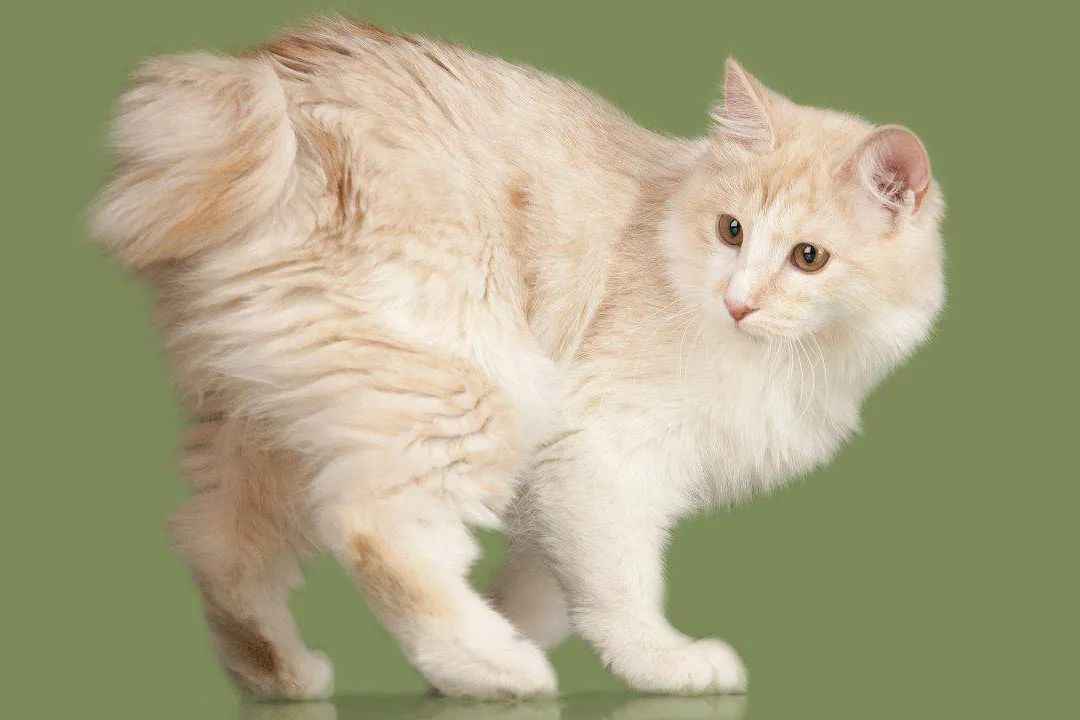
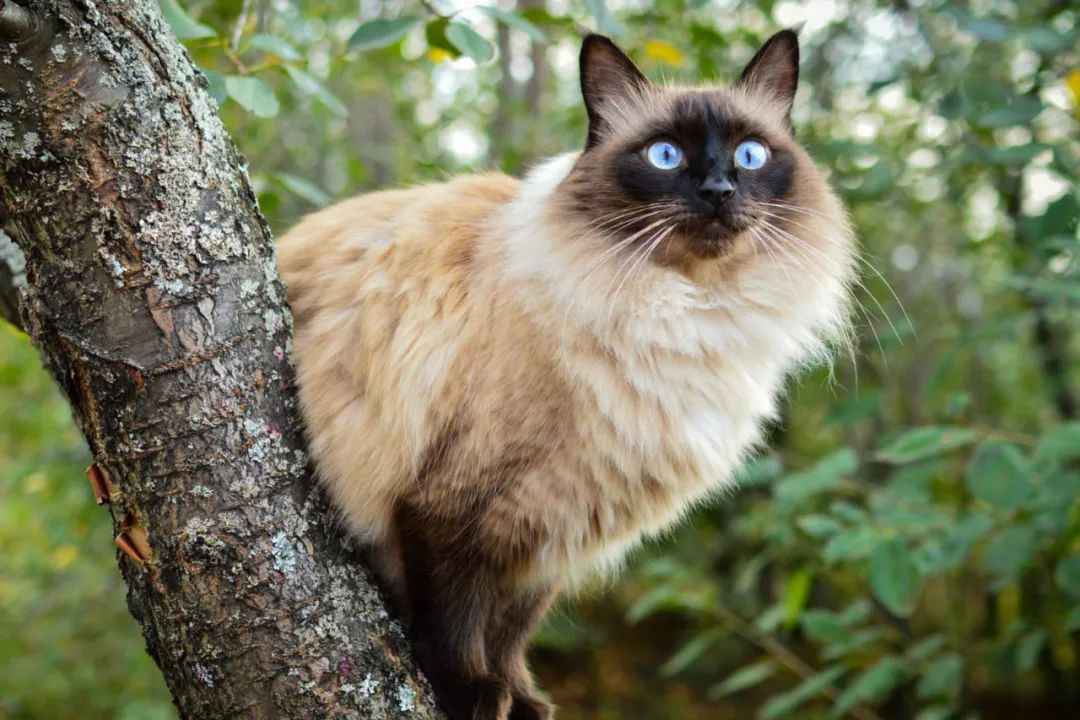
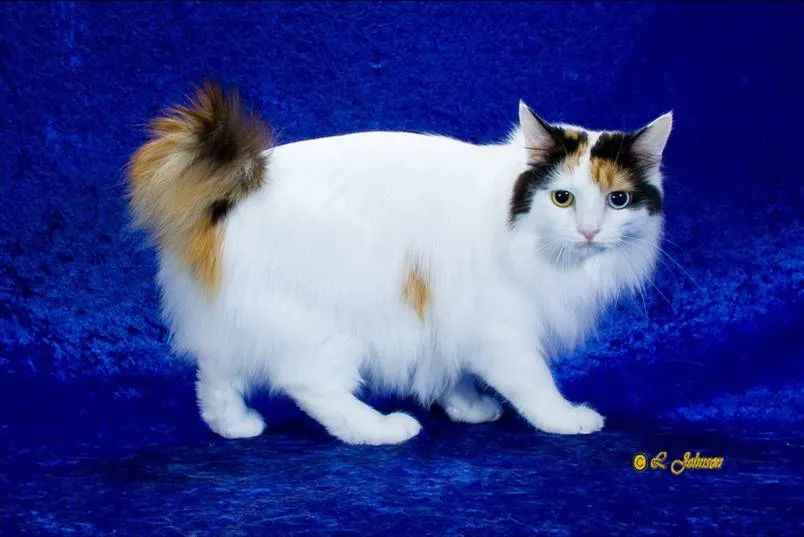
The Japanese Bobtail Longhair’s most iconic feature is its compact, curved tail, measuring 5–10 cm and resembling a rabbit’s pom-pom. Composed of fused or kinked vertebrae, each tail is as unique as a fingerprint, with hair longer than the body’s coat, creating a lush, chrysanthemum-like effect in longhairs. The breed’s triangular head, high cheekbones, and large, slanted eyes—often with heterochromia (odd eyes)—lend it an exotic, almost sculptural appearance.
Its semi-long, silky coat lacks an undercoat, minimizing shedding and matting, though weekly grooming is recommended to maintain its glossy texture. Coat colors span the spectrum, from solid blacks and whites to intricate tortoiseshells and the revered “Mi-Ke” tri-color (red, black, and white), which symbolizes good luck and inspired the Maneki Neko (“beckoning cat”) mascot.
Personality and Temperament: The Perfect Companion
Known for their outgoing and intelligent nature, Japanese Bobtail Longhairs are highly social cats that thrive on human interaction. They “talk” with chirps and trills, follow their owners like shadows, and even learn tricks, earning them the nickname “dog-like cats”. While energetic and playful, they also enjoy quiet moments curled beside their humans, balancing curiosity with loyalty.
These cats adapt well to households with children or other pets, though their hunting instincts may require supervision around small animals. Breeders emphasize the importance of indoor-only environments to protect their safety and prevent genetic dilution.
Health and Care: Nurturing a Robust Breed
Generally robust, Japanese Bobtail Longhairs have a lifespan of 15–17 years but may be prone to polycystic kidney disease (PKD) and obesity if not provided with a balanced diet and regular exercise. Responsible breeders conduct genetic testing to screen for PKD, ensuring healthier bloodlines.
Grooming routines are manageable, with longhairs requiring weekly brushing to maintain their coat’s luster. Their lack of undercoat makes them suitable for allergy sufferers, though individual reactions vary.
Cultural Resonance and Modern Influence
Beyond their role as pets, Japanese Bobtail Longhairs remain cultural icons. The Mi-Ke tri-color variant is synonymous with prosperity in Japan, while the breed’s image adorns art, literature, and even modern social media. Instagram stars like @luna_the_bobtail and @hiro_and_kuma showcase their playful antics to thousands of followers, further elevating their global appeal.
In Nagasaki, Japan, where bobtails constitute 80% of the feline population, their presence is celebrated as a symbol of historical resilience and genetic uniqueness. This blend of ancient heritage and contemporary charm cements the Japanese Bobtail Longhair’s status as a breed that transcends time.
With its regal bearing, affectionate demeanor, and rich cultural legacy, the Japanese Bobtail Longhair continues to enchant cat lovers, proving that true elegance is timeless.