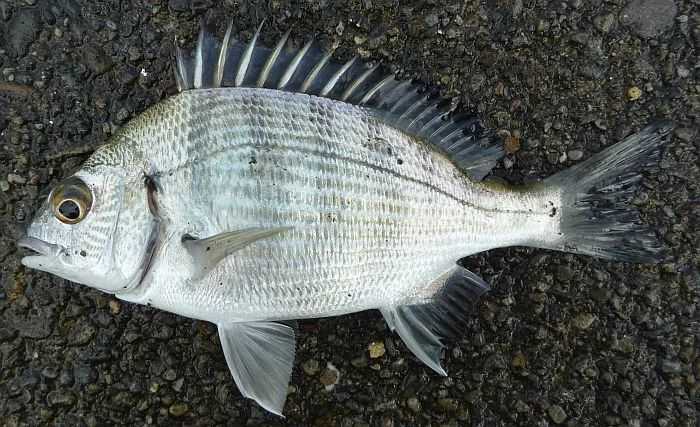
Paerargyrops edita: The Shallow-Water Snapper of the North Pacific
Paerargyrops edita, a distinct species of marine fish, inhabits the western North Pacific Ocean, with significant populations in the South China Sea and the southern East China Sea. Growing to lengths of 130–230 millimeters, this fish is characterized by its streamlined body and preference for sandy-muddy seabeds, making it a notable inhabitant of coastal ecosystems in its range.
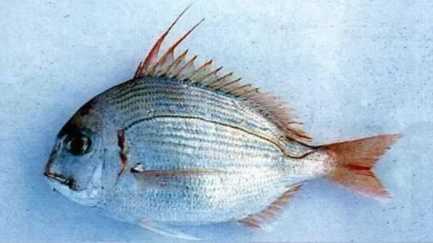
Lutjanus erythropterus: The Scarlet Snapper of Tropical Seas
Lutjanus erythropterus, commonly known as the red snapper or redfin snapper, is a highly sought-after marine fish renowned for its vibrant coloration and culinary appeal. Belonging to the Lutjanidae family, this species inhabits the warm waters of the Indo-Pacific region, captivating fishermen, chefs, and marine enthusiasts with its striking appearance and ecological significance.
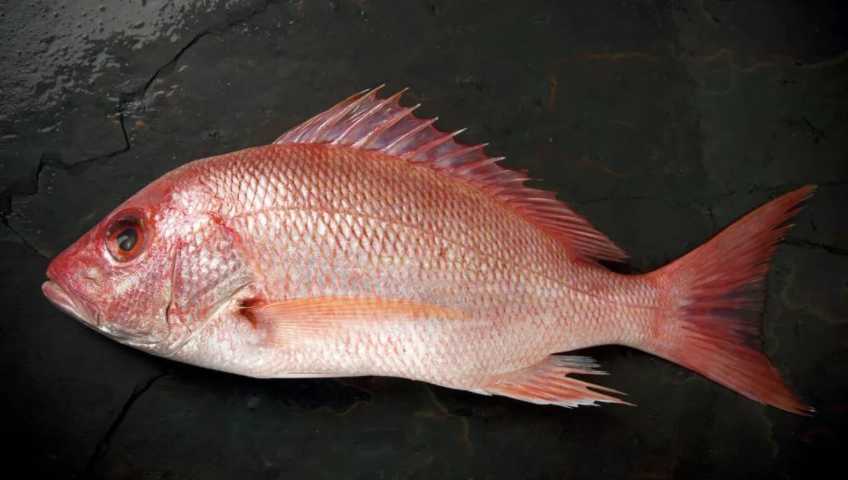
Lutjanus argentimaculatus: The Ruby Snapper of Tropical Shores
Lutjanus argentimaculatus, commonly known as the ruby snapper, is a striking species within the Lutjanidae family, characterized by its elongated, laterally compressed body and vibrant coloration. Inhabiting the warm waters of the Indian Ocean and South Pacific, this fish features a distinct reddish-brown hue on its dorsal side, fading to a lighter shade on the abdomen. Juveniles display 7–8 silvery transverse bands along their flanks, which gradually disappear as they mature, giving way to a sleek, uniform adult appearance.
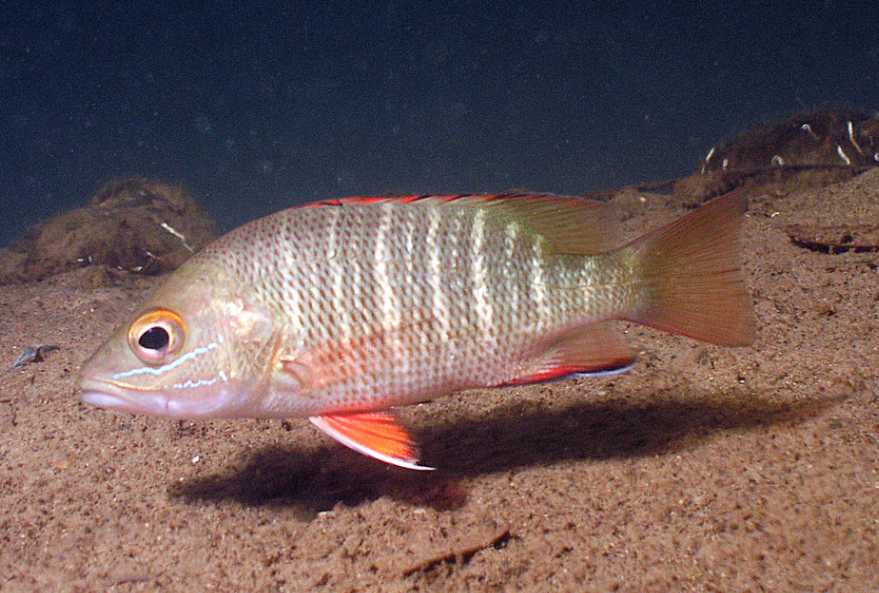
Apogon quadrilineatus: The Four-Lined Cardinalfish of Coral Reefs
Apogon quadrilineatus, commonly known as the four-lined cardinalfish, is a small, vibrant species belonging to the Apogonidae family, thriving in the warm, tropical waters of the Indo-Pacific region. Renowned for its striking pattern and nocturnal habits, this fish is characterized by a sleek, elongated body with a deep red to orange hue, adorned with four distinct horizontal black lines that run the length of its flanks, creating a bold contrast against its vivid coloration.
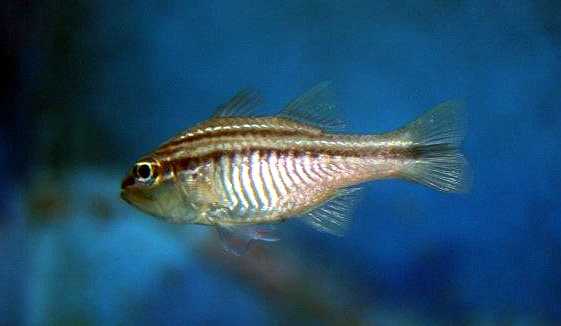
Apogon kiensis: The Pendant-Banded Cardinalfish of Tropical Reefs
Apogon kiensis, commonly known as the pendant-banded cardinalfish, is a small, captivating species belonging to the Apogonidae family, inhabiting the warm, clear waters of the Indo-Pacific region. Named for the distinct vertical bands on its body, this fish features a streamlined, oval-shaped body with a rich reddish-brown to orange coloration, accented by two prominent dark vertical bands—one just behind the gills and another near the caudal fin—giving it a striking and recognizable appearance.
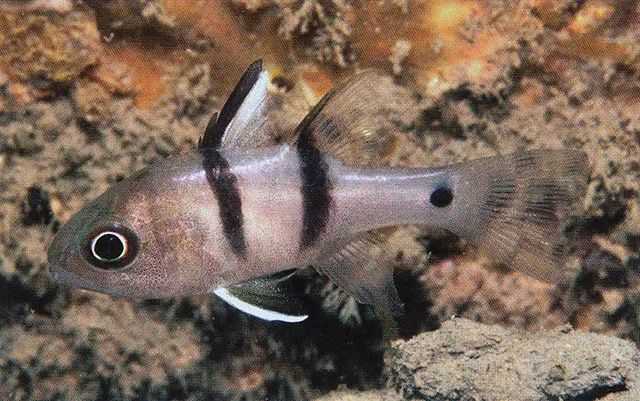
Stegastes fasciolatus: The Five-Lined Damselfish of Coral Reefs
Stegastes fasciolatus, commonly known as the five-lined damselfish, is a vibrant and territorial species belonging to the Pomacentridae family. Inhabiting the warm, tropical waters of the Indo-Pacific region, this fish is celebrated for its distinctive appearance and feisty behavior. Characterized by its oval-shaped body and bold coloration, it serves as a lively addition to coral reef ecosystems, playing a crucial role in maintaining ecological balance.
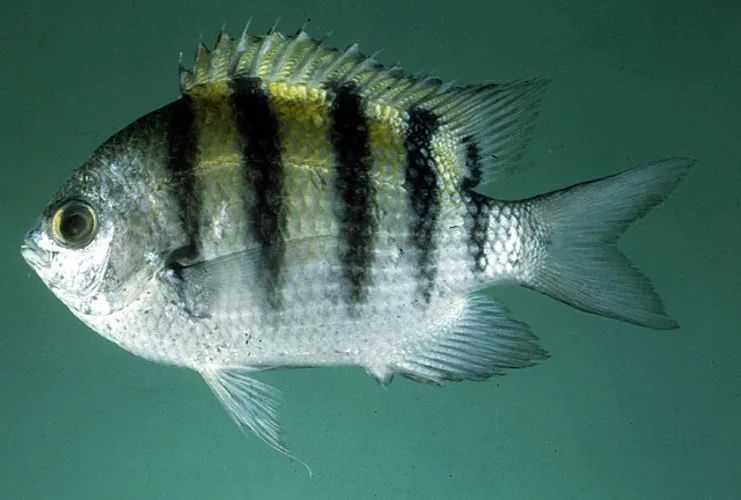
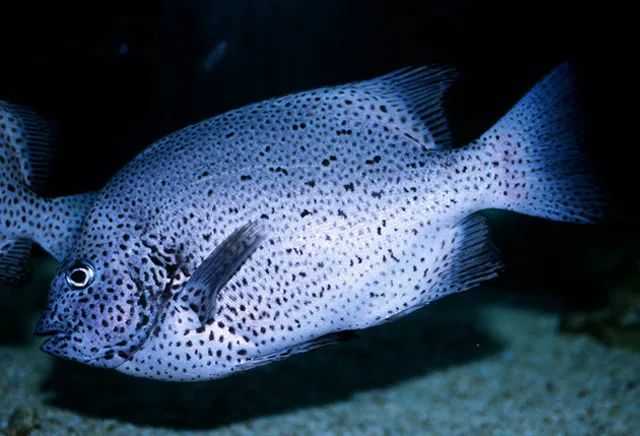
Hapalogenys nitens: The Striped Beard Croaker of Coastal Seas
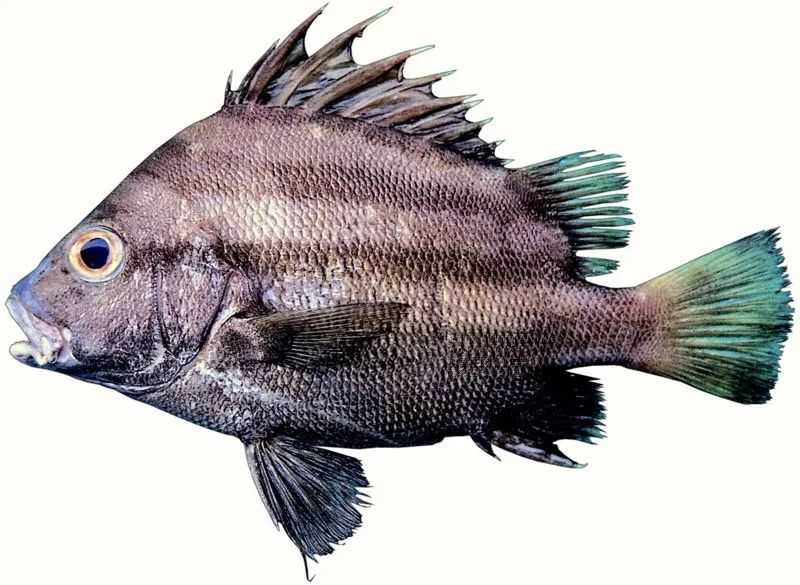
Hapalogenys nitens, commonly known as the striped beard croaker, is a distinctive marine fish belonging to the Haemulidae family. Native to the temperate and subtropical waters of the northwestern Pacific Ocean, this species is celebrated for its unique appearance and ecological significance. Characterized by its robust, laterally compressed body and striking longitudinal stripes, it stands out as a notable inhabitant of coastal ecosystems.
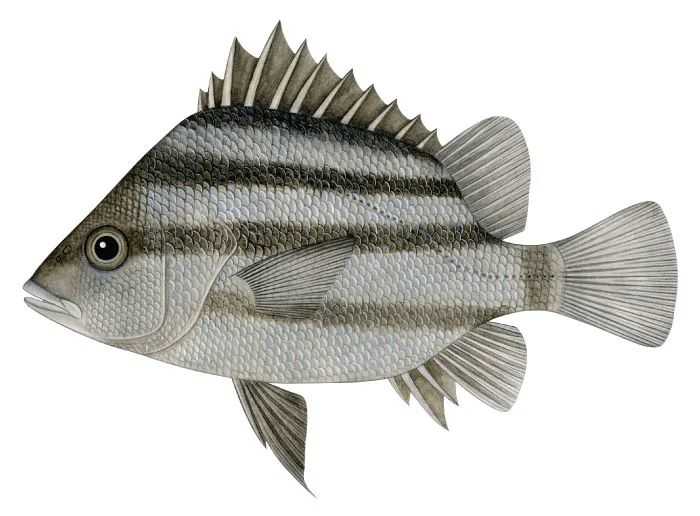
Hapalogenys mucronatus: The Oblique-Banded Beard Croaker of Asian Coastal Waters
Hapalogenys mucronatus, commonly known as the oblique-banded beard croaker, is a distinctive marine fish belonging to the Haemulidae family. Inhabiting the temperate and subtropical waters of the northwestern Pacific Ocean, this species is celebrated for its unique appearance and cultural significance in regional fisheries. Characterized by its robust body and striking diagonal stripes, it stands out as a notable inhabitant of coastal ecosystems.