The Flame Nebula: Two Cosmic Identities for a Fiery Stellar Nursery


Astro Information
The Flame Nebula: Two Cosmic Identities for a Fiery Stellar Nursery

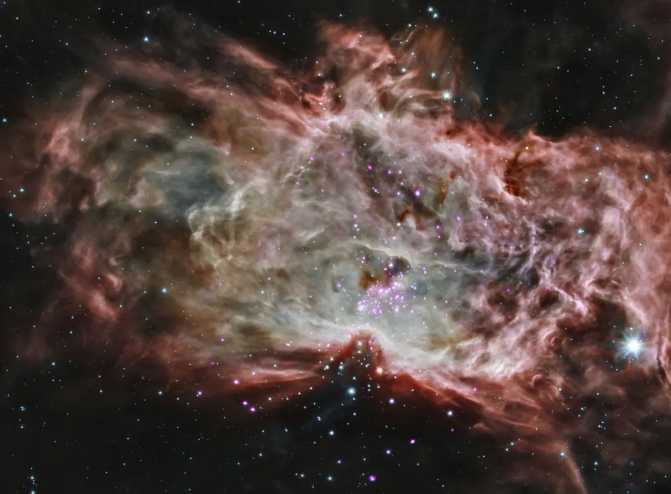
The Flame Nebula, a dramatic celestial inferno in the constellation Orion, goes by two official designations: NGC 2024 and Sh2-277. These identifiers trace back to historic astronomical catalogs that have shaped our understanding of the universe. While they represent the same glowing gas cloud, each number carries the legacy of the scientists and projects that first documented this cosmic wonder.


NGC 2024: A Legacy from the New General Catalogue

The designation NGC 2024 stems from the New General Catalogue (NGC), a monumental project compiled by Danish astronomer Johann Dreyer in 1888. Part of a three-volume work listing 7,840 celestial objects, the NGC aimed to consolidate observations from 18th- and 19th-century astronomers like William Herschel. Dreyer assigned NGC 2024 to the Flame Nebula based on its position in the sky (Right Ascension: 05h 41m 29s, Declination: -02° 19′ 38″), describing it as a "bright nebula with a star involved."
 
Source: Images from the Internet, if there is any infringement, please contact the removal of


This catalog became the gold standard for deep-sky objects, and today, NGC numbers remain synonymous with astronomical heritage. The Flame Nebula’s NGC entry reflects its status as a prominent emission nebula, ionized by the hot star Alnitak in Orion’s Belt, which illuminates the nebula’s fiery red hydrogen gas and dark dust lanes.

Sh2-277: Sharpless’ Vision for H II Regions

The alternative designation Sh2-277 comes from the Sharpless Catalog of H II Regions, published by American astronomer Stewart Sharpless in 1959. Focused exclusively on emission nebulae (H II regions) ionized by young stars, this catalog listed 317 objects across the Milky Way. Sharpless assigned Sh2-277 to the Flame Nebula, categorizing it by its hydrogen emission and spatial distribution.


Sharpless’ work emphasized the nebula’s role as a stellar nursery, highlighting its association with the Orion OB1 association— a group of massive, young stars that sculpt the nebula’s structure through their intense radiation and stellar winds. The Sh2-277 designation underscores the Flame Nebula’s scientific importance in studies of star formation and interstellar gas dynamics.

Why Two Names? The Evolution of Astronomical Cataloging

Astronomical objects often carry multiple designations because different catalogs prioritize various criteria:


  • NGC numbers are positional, based on visual observations from telescopes of the 1800s.
  • Sharpless numbers classify objects by physical properties (e.g., H II region emission).


For the Flame Nebula, both NGC 2024 and Sh2-277 serve as cosmic addresses, guiding astronomers to a region where new stars are born. While modern surveys like the Gaia mission have introduced new identifiers, the legacy of Dreyer and Sharpless lives on in these classic designations—reminders that every celestial object has a history as rich as the universe itself.


Today, telescopes like JWST peer into NGC 2024/Sh2-277 to study baby stars hidden within its dust clouds, proving that even a century after its cataloging, the Flame Nebula continues to ignite scientific curiosity.
Latest Stories
Animal Information1 minute readScientifically known as Psychrolutes marcidus, the blobfish inhabits 600–1,200m deep-sea waters, measuring 30–38 cm in length. This gelatinous creature lacks bones and muscles, with a body density slightly lower than water—enabling it to float passively while capturing prey.
Bird Information1 minute readWith wingspans exceeding 3 meters, albatrosses reign as the Southern Ocean’s ultimate flight virtuosos, capable of continuous flights lasting weeks without touching land. Their lives are a testament to maritime endurance—spending most existence adrift over waves, they’ve even mastered the art of sleeping mid-flight.
Car Information1 minute readGatebil has solidified its status as a cornerstone of Scandinavian automotive subculture, though its exact founding date remains unchronicled. Documentation suggests organized events emerged around 2005, birthed from a grassroots movement of motorsport enthusiasts seeking a platform to showcase modified vehicles, share automotive passion, and celebrate driving joy.
Car Information1 minute readAs the E90 3 Series debuted, the E46 M3 CS emerged as the final hurrah for BMW’s iconic sports sedan. Priced at £2,400 for the Competition Package (CS Kit) in the UK, the total cost of an M3 equipped with these upgrades reached £43,555—modest upgrades on paper
Astro Information1 minute readNGC 6302, a planetary nebula nicknamed the "Butterfly Nebula," lives up to its floral-insect moniker with wing-like gas plumes spanning 3 light-years. Located 4,000 light-years away in Scorpius, this stellar corpse showcases the dramatic final act of a massive star—now a 250,000°C central star evolving into a white dwarf, its ultraviolet radiation ionizing the surrounding nebula into a kaleidoscopic display.
Car Information1 minute readAt first glance, this 2004 Lamborghini Murciélago for sale in the US appears like any other iconic V12 supercar from the Italian marque—until you catch a glimpse of its rear end. The exhaust design, far from conventional, forms a quirky silhouette that uncannily resembles a frog, complete with rounded "eyes" and a wide, downturned "mouth" framing the tailpipes.
Feline News2 minute readThe Oriental Shorthair, a breed celebrated for its striking elegance and dynamic personality, traces its origins to mid-20th century breeding programs in the UK and the US2. Developed as a close relative of the Siamese, these cats emerged from intentional crossbreeding with British Shorthairs and Abyssinians to create a feline with the Siamese’s sleek physique but expanded coat color possibilities28. By the 1970s, the breed gained international recognition, captivating cat lovers worldwide with its unique charm.